





What's Happening?
QuantumScape Corporation has announced significant advancements in solid-state battery technology and production. In November 2026, the company unveiled 'Osprey,' an open all-solid-state battery development platform. This platform integrates QuantumScape's
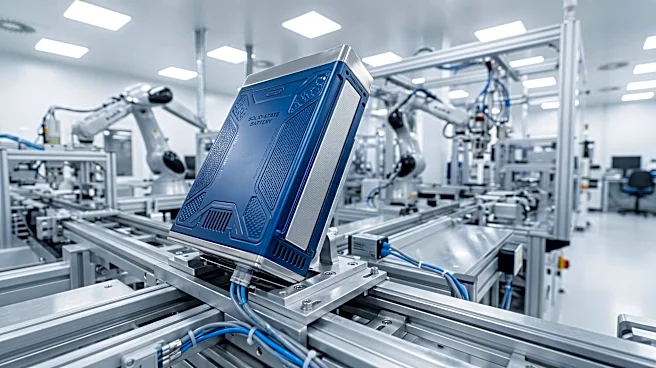
proprietary ceramic separator, anode-free lithium-metal architecture, and solid cathode technology. Testing of the Osprey platform demonstrated impressive performance, achieving 1,000 charge cycles with approximately 80% capacity retention under one-atmosphere pressure. Furthermore, it showcased a five-minute fast charging capability from 10% to 80%. Building on this technological progress, QuantumScape also revealed plans in October 2026 for a 100 MWh solid-state battery production line. This initiative involves a partnership with Germany's Muehlbauer Group, focusing on automated cell-assembly equipment and manufacturing processes. The new production line aims to address growing demand from sectors beyond electric vehicles, specifically targeting AI data centers, aerospace, and defense applications.
Why It's Important?
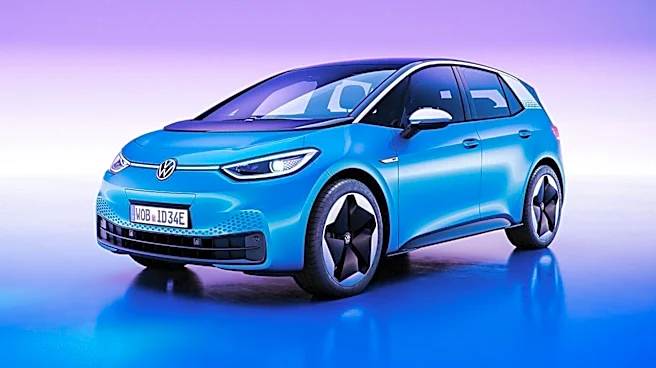
These developments from QuantumScape are crucial for the U.S. and global energy storage landscape. The Osprey platform's performance metrics, particularly the high cycle life and rapid charging capabilities, represent a significant step towards the commercialization of automotive-grade solid-state batteries. This could lead to electric vehicles with longer ranges, faster charging times, and enhanced safety, potentially accelerating EV adoption in the U.S. The planned 100 MWh production line signifies a strategic expansion of solid-state battery applications beyond the automotive sector. By targeting AI data centers, aerospace, and defense, QuantumScape is positioning this advanced battery technology to meet the high-energy-density and reliability requirements of critical infrastructure and national security applications. This diversification could reduce reliance on traditional battery chemistries, offering more robust and efficient power solutions for key U.S. industries and potentially bolstering domestic technological leadership in energy storage. The collaboration with Muehlbauer also underscores the importance of scalable production processes and automated manufacturing in bringing these advanced technologies to market.
What's Next?
The immediate next steps for QuantumScape will likely involve further development and refinement of the Osprey platform, moving towards full commercialization for automotive and other applications. The partnership with Muehlbauer Group will focus on establishing and scaling the 100 MWh solid-state battery production line, with an emphasis on optimizing automated cell assembly and manufacturing processes. This will be critical for meeting the emerging demand from AI data centers, aerospace, and defense sectors. Other major players in the solid-state battery market, including Toyota Motor Corporation, Panasonic Corporation, Solid Power Inc., and Samsung SDI, are expected to continue their efforts in electrolyte development, battery architecture, pilot manufacturing, and OEM partnerships. The broader market will be watching for improvements in production yields, reductions in manufacturing costs, and the establishment of reliable electrolyte supply chains, which are key factors for strengthening competitive positions as commercialization expands.
Beyond the Headlines
The advancements by QuantumScape could trigger a broader shift in energy storage paradigms across multiple U.S. industries. The high energy density and safety characteristics of solid-state batteries, as demonstrated by the Osprey platform, have profound implications for the design and operational efficiency of AI data centers, where power demands are constantly increasing. In aerospace and defense, the enhanced reliability and compact nature of these batteries could enable new capabilities for drones, advanced aircraft, and portable military equipment. Ethically, the move towards more sustainable and efficient energy storage could reduce the environmental footprint of these energy-intensive sectors. Legally, the development of proprietary technologies like QuantumScape's ceramic separator and anode-free lithium-metal architecture could lead to new intellectual property battles and regulatory frameworks for advanced battery manufacturing and deployment. Culturally, the widespread adoption of such technologies could further accelerate the transition to a more electrified and technologically advanced society, impacting everything from consumer electronics to national infrastructure.