








What's Happening?
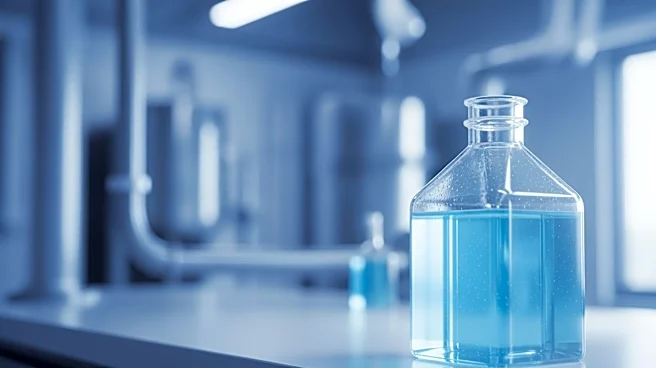
ENF Technology has started supplying locally produced hydrofluoric acid to SK hynix, marking a significant step in reducing reliance on imported materials for semiconductor manufacturing. This development follows Japan's 2019 export control measures,
which highlighted the need for localization of critical materials like hydrofluoric acid. ENF Technology completed product qualification earlier this month and delivered its first shipment to SK hynix, where it is currently being evaluated for operational stability. The company has invested over 100 billion won in its Cheonan facility to establish production capabilities, aiming to secure a meaningful share of SK hynix's production-line demand. This move is part of a broader effort to improve profitability and reduce costs associated with imported raw materials.
Why It's Important?
The localization of hydrofluoric acid production by ENF Technology is crucial for the semiconductor industry, particularly in South Korea, which has been heavily reliant on Japanese imports. This shift not only enhances supply chain resilience but also reduces cost burdens associated with imported materials. By securing a local supply of hydrofluoric acid, SK hynix and potentially other semiconductor manufacturers can mitigate risks related to international trade tensions and export restrictions. This development could also alter the competitive landscape, as domestic suppliers like ENF Technology and Soulbrain gain a foothold in a market traditionally dominated by Japanese companies. The move is expected to enhance the profitability of semiconductor manufacturing in South Korea and potentially influence global supply chains.
What's Next?
ENF Technology plans to expand its customer base beyond SK hynix by conducting qualification processes with other global semiconductor manufacturers. The company aims to begin initial commercial shipments in the second half of the year. This expansion could further solidify its position in the market and reduce the dominance of Japanese suppliers. Additionally, the successful commercialization of its hydrofluoric acid could lead to increased investments in local production facilities, further strengthening the domestic semiconductor supply chain. As the company continues to invest in its Cheonan facility, it may also explore opportunities to produce other critical materials, enhancing its role as a key player in the semiconductor industry.