





What's Happening?
A 'deck of cards ab workout' is presented as a method for building core strength through varied, high-repetition exercises. This workout involves assigning a specific core exercise to each suit in a standard deck of cards. Participants shuffle the deck and perform
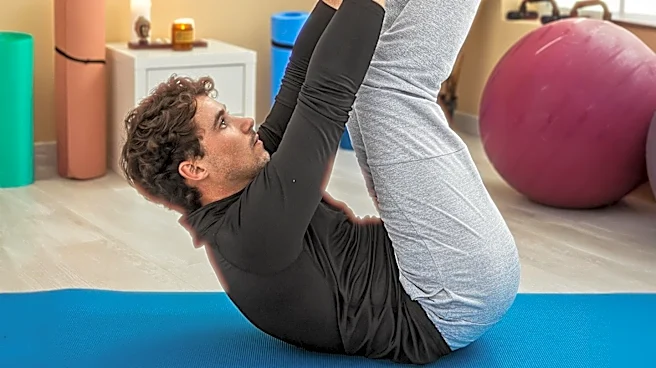
the exercise corresponding to the suit of each card drawn, with the number on the card dictating the repetitions. Face cards typically count as 10 reps, and aces as 1 or 11, leading to a total of 340 reps for a full 52-card deck. The method aims to combat boredom in traditional ab routines by introducing randomness and a clear, fixed rep total. Beginners are advised to start with a half deck (26 cards, approximately 170 reps). The exercises can be scaled in difficulty, from beginner moves like crunches and dead bugs to advanced options such as V-ups and burpees, which also incorporate cardio. The workout duration can range from 15-20 minutes for a half deck to 30-45 minutes or more for a full deck, depending on the exercises chosen and rest taken.
Why It's Important?
This workout approach is significant for individuals seeking to enhance core strength and endurance by offering a dynamic and engaging alternative to repetitive routines. The unpredictable nature of the card draw can help maintain motivation and prevent plateaus, which are common challenges in fitness regimens. By forcing participants to perform a wide range of exercises in varying sequences, it ensures a comprehensive engagement of different core muscles, contributing to overall stability and functional strength. The scalability of the workout makes it accessible to a broad audience, from fitness novices to advanced athletes, allowing individuals to tailor the intensity to their current fitness level. This method can also be particularly beneficial for those who struggle with adherence to structured workout plans, as the game-like element can make exercise more enjoyable and less monotonous, fostering greater consistency in training.
What's Next?
Individuals interested in this workout can immediately implement it using a standard deck of cards and selecting four core exercises. Progression involves gradually increasing the number of cards used, adjusting card values (e.g., aces as 11), or incorporating more challenging exercises. For those seeking convenience, specialized decks that print exercises and rep counts directly on the cards are available, eliminating the need to remember assignments or do math. Regular tracking of completion times can serve as a metric for improvement, encouraging participants to beat their previous records. Fitness enthusiasts might also explore integrating this method into broader fitness programs, combining it with upper and lower body workouts for a full-body conditioning approach. The flexibility of the workout allows for daily short sessions or more intensive full-deck sessions a few times a week, depending on recovery needs.
Beyond the Headlines
The 'deck of cards' workout concept extends beyond just core exercises, representing a broader trend in fitness towards gamification and varied training methodologies. This approach taps into psychological principles of novelty and challenge, which can significantly impact long-term exercise adherence. By introducing an element of chance, it disrupts the predictability that often leads to boredom and disengagement in fitness routines. This method also subtly encourages mental agility, as participants must quickly adapt to different exercises and rep counts. Furthermore, it highlights the effectiveness of simple, accessible tools (like a deck of cards) in creating effective and challenging workouts without requiring specialized equipment. This democratizes fitness, making robust training accessible to anyone, anywhere, and underscores the idea that creativity in exercise design can be as impactful as advanced training techniques or expensive gym memberships.