


What's Happening?
SIFMA (Securities Industry and Financial Markets Association) has reiterated its recommendation for a full market close on Wednesday, November 11, 2026, for the trading of U.S. dollar-denominated fixed income securities. This recommendation applies to
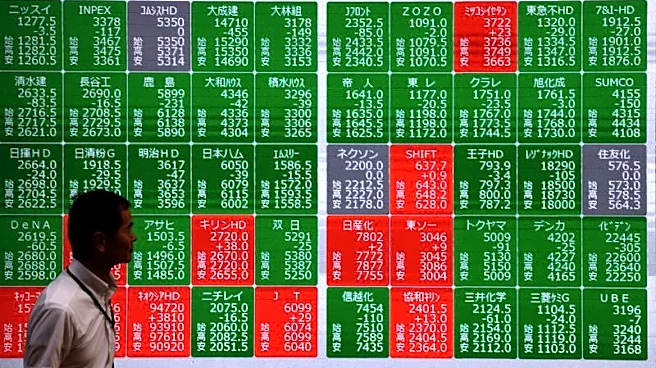
markets in the U.S., the U.K., and Japan, in observance of the U.S. Veterans Day Holiday. The affected securities include U.S. dollar-denominated government securities, mortgage- and asset-backed securities, over-the-counter investment-grade and high-yield corporate bonds, municipal bonds, and secondary money market trading in bankers’ acceptances, commercial paper, and Yankee and Euro certificates of deposit. SIFMA's recommendations are advisory, meaning each member firm ultimately decides whether its fixed income departments will remain open for trading, and all recommendations are subject to change based on market conditions.
Why It's Important?
This recommendation is significant for the stability and operational consistency of the U.S. fixed income markets, particularly given its international reach to the U.K. and Japan. A coordinated market close helps prevent fragmented trading activity and ensures that market participants have a clear understanding of trading hours during a U.S. federal holiday. While SIFMA's recommendation is not mandatory, it serves as a strong guideline for broker-dealers, investment banks, and asset managers, influencing trading volumes and liquidity on the specified day. Adherence to such recommendations helps maintain orderly markets and reduces operational risks associated with holiday trading, benefiting institutional investors and the broader financial ecosystem by providing a predictable trading environment.
What's Next?
Fixed income market participants, including broker-dealers, investment banks, and asset managers, will review SIFMA's recommendation and make their own decisions regarding trading operations on November 11, 2026. While many firms are expected to follow the recommendation for a full market close, some may choose to remain open for limited trading, particularly in response to specific client needs or market conditions. The financial industry will monitor any further announcements from SIFMA or other regulatory bodies that might alter this recommendation. The consistent application of such holiday schedules contributes to the overall efficiency and reliability of the U.S. and international fixed income markets.
Beyond the Headlines
The practice of SIFMA issuing market close recommendations for holidays underscores the self-regulatory aspects of the financial industry. These recommendations, while non-binding, reflect a collective effort to manage market operations and ensure fairness and orderliness. The inclusion of U.K. and Japan markets in the recommendation for a U.S. holiday highlights the interconnectedness of global financial markets and the need for international coordination in trading schedules. This coordination helps mitigate potential arbitrage opportunities or operational disruptions that could arise from disparate holiday observances across major financial centers. It also reflects the critical role of fixed income markets in global finance, where even minor disruptions can have widespread effects.