




What's Happening?
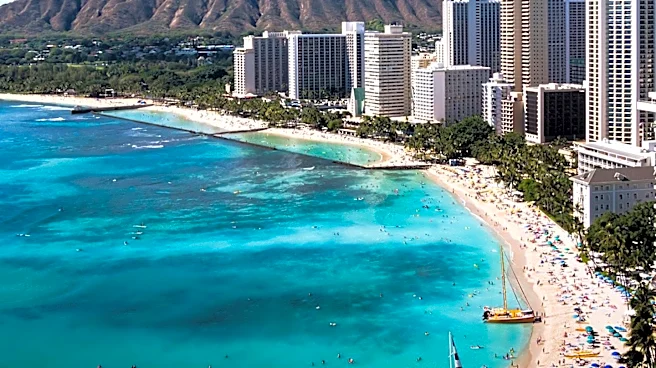
Hawaii is experiencing a significant shift in its tourism landscape, characterized by fewer overall visitors but a notable increase in per-person spending. This trend aligns with a long-standing goal to attract 'high-value' tourists who spend more, stay
longer, and leave a smaller environmental footprint. However, industry insiders caution that the rise in spending is largely due to increased costs, making Hawaii a more expensive destination. Preliminary figures from the state Department of Business, Economic Development and Tourism indicate nearly a million fewer visitors than the pre-pandemic peak, while per-person spending has risen. Travelers are also staying for fewer days, with the average visitor in July spending $296 daily and staying 7.59 days, down from 8.83 days the previous year. Hotel room rates have increased by 3.6% to $398 per night, and vacation rentals have seen a 14.5% jump to $543 per night. Taxes on lodging, including a new green fee, can now reach nearly 20% of the total bill. International travel, particularly from Japan and Canada, remains significantly down compared to 2019, with domestic visitors, primarily from the West Coast, making up the largest share of arrivals.
Why It's Important?
This shift in Hawaii's tourism model has profound implications for its economy and local communities. While the state aimed for a 'high-value' visitor, the current reality suggests that the increased spending is more a reflection of inflation and rising costs rather than a deliberate attraction of wealthier clientele. This makes Hawaii less accessible for middle-class families, potentially alienating a significant segment of its traditional visitor base. The decline in visitor nights, as noted by Jennifer Chun, director of research at Hawaii Tourism Authority, means that while hotels may still collect their rates, smaller retailers and businesses that rely on tourists staying longer and exploring beyond main attractions are feeling the brunt. The significant drop in Japanese and Canadian visitors, partly due to economic factors and past political tensions, highlights the vulnerability of relying on specific international markets. The increased cost of living, partly driven by the tourism industry, also makes it harder for those who sustain the industry to afford to live in Hawaii, leading to challenges in staffing and local sentiment towards tourism.
What's Next?
Hawaii's tourism authorities face the challenge of balancing the desire for 'high-value' visitors with maintaining accessibility and supporting local businesses. The Hawaii Tourism Authority's interim president, Caroline Anderson, acknowledges the concern that Hawaii may be becoming a destination only for the wealthy. Future strategies will likely focus on how to market to the desired demographic while ensuring equity and broader economic benefits. The industry will need to address the declining international visitor numbers and diversify its markets beyond traditional sources like Japan. Efforts to promote regenerative tourism, which is supported in principle by industry leaders, will need clearer definitions and increased visitor awareness to be effective. The ongoing enforcement of zoning codes against short-term vacation rentals will continue to impact accommodation options and costs. The state may also need to re-evaluate its tax structures and pricing strategies to avoid making the destination prohibitively expensive for a wider range of travelers, as industry experts like Kekoa McClellan suggest that the current strategy has made Hawaii 'too expensive.'
Beyond the Headlines
The current situation in Hawaii underscores a broader global challenge in tourism: managing overtourism while ensuring economic sustainability and cultural preservation. The push for 'high-value' tourism, while seemingly beneficial on the surface, can inadvertently lead to exclusivity and further strain on local communities if not carefully managed. The ethical dimension of tourism development comes into sharp focus, as the goal of attracting wealthier visitors raises questions about who benefits from tourism and who is priced out. The decline in local sentiment towards tourism, though showing some recovery, indicates a need for more community-centric approaches that prioritize the well-being of residents alongside economic gains. The shift also highlights the importance of territorial innovation in tourism, where resilience strategies are tailored to the specific vulnerabilities and capacities of each place, rather than applying generic solutions. This situation could serve as a case study for other popular destinations grappling with similar issues, prompting a re-evaluation of what constitutes 'successful' tourism beyond mere visitor numbers or revenue figures.