






What's Happening?
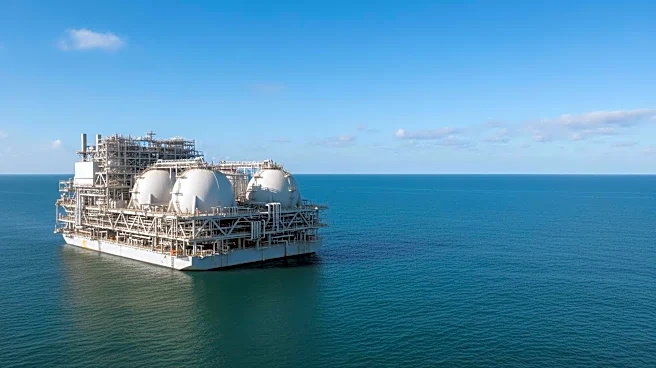
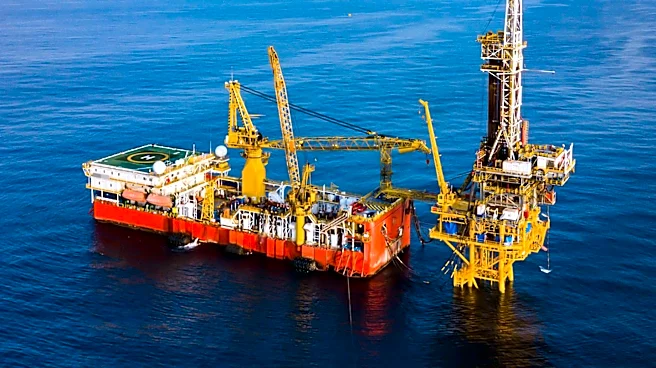
A French company has been selected by Samsung Heavy Industries to design cryogenic LNG storage tanks for Delfin FLNG 1, the first floating LNG export facility to be deployed in the United States. This vessel, developed by Delfin Midstream, is set to be stationed
offshore Louisiana and is expected to become the world's largest FLNG unit with an annual production capacity of 4.4 million tonnes of LNG. The project will feature eight cryogenic tanks with a combined storage capacity of 180,000 cubic meters, utilizing GTT's proprietary Mark III Flex membrane containment system. This system is designed to withstand challenging offshore conditions, including hurricanes. The project is a significant milestone for the U.S. LNG industry and highlights the growing importance of GTT's technology in global LNG supply.
Why It's Important?
The development of Delfin FLNG 1 is crucial for expanding the global LNG supply, particularly as demand for cleaner energy sources increases. The project underscores the strategic importance of floating LNG facilities, which offer a faster and less capital-intensive alternative to traditional onshore liquefaction plants. For the U.S., this project represents a significant advancement in its LNG export capabilities, potentially enhancing its position in the global energy market. The involvement of GTT and Samsung Heavy Industries also highlights the role of international collaboration in advancing energy infrastructure, which could lead to more efficient and resilient energy systems worldwide.
What's Next?
The construction of the Delfin FLNG 1 vessel is scheduled for delivery in 2030, following Delfin Midstream's $2.9 billion notice to proceed issued to Samsung Heavy Industries. As the project progresses, it is likely to attract attention from other stakeholders in the energy sector, potentially leading to further investments in similar floating LNG projects. The success of this project could also influence policy decisions regarding energy exports and infrastructure development in the U.S., as well as inspire similar initiatives in other regions.