


What's Happening?
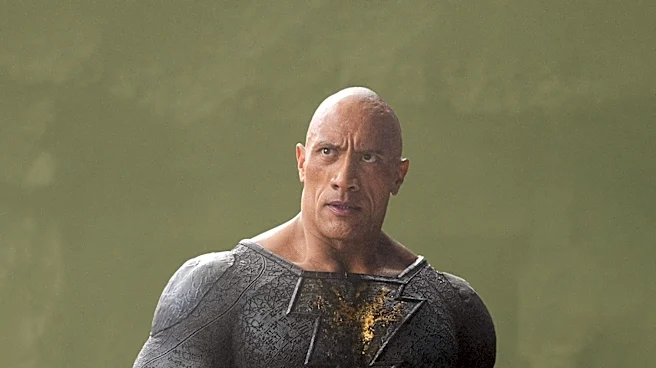
The DC superhero film 'Black Adam,' starring Dwayne Johnson and featuring Henry Cavill as Superman, is scheduled to leave Netflix US on November 1, 2026. This departure is part of a larger trend where numerous licensed titles, including 'American Sniper,'
'Jumanji,' 'Speed,' and several 'Fast & Furious' and 'Chucky' films, are exiting the platform as their licensing agreements conclude. 'Black Adam' was released theatrically on October 21, 2022, after delays due to the COVID-19 pandemic. The film grossed $393.3 million worldwide against a reported budget of $190 to $260 million, with some publications describing it as a box-office bomb. Critics gave the film mixed-to-negative reviews, holding a 39% approval rating on Rotten Tomatoes, though audiences gave it a 'B+' grade on CinemaScore. Johnson confirmed in December 2022 that a sequel was not in DC Studios co-CEO James Gunn’s immediate plans, attributing this in August 2023 to leadership changes at Warner Bros. Discovery.
Why It's Important?
The removal of 'Black Adam' from Netflix US highlights the evolving landscape of content licensing and its impact on streaming availability for major studio films. For consumers, this means a shrinking window to access certain titles on specific platforms, potentially driving them to other services or digital purchases. For studios like Warner Bros. Discovery, the decision to pull content from third-party streamers reflects a strategic shift towards consolidating their intellectual property on their own platforms or negotiating new, potentially more lucrative, licensing deals. The film's underperformance at the box office and subsequent lack of a sequel also underscore the financial risks and creative challenges within the superhero genre, particularly for non-Marvel or established DC properties. This situation could influence future production decisions and distribution strategies for large-budget films, as studios re-evaluate the profitability and audience reception of such ventures.
What's Next?
As 'Black Adam' leaves Netflix US, viewers interested in watching the film will need to seek it out on other streaming services that may acquire its licensing rights, or through digital rental and purchase options. The film's departure from Netflix could also signal its eventual availability on Warner Bros. Discovery's own streaming platform, Max, as studios increasingly prioritize their proprietary services. For Dwayne Johnson, this event, coupled with the cancellation of a 'Black Adam' sequel, may lead to a re-evaluation of his involvement in future superhero projects and his overall film strategy. The broader trend of content cycling off major streaming platforms is expected to continue, prompting consumers to adapt to a more fragmented and dynamic streaming environment where favorite titles may frequently change availability.
Beyond the Headlines
The case of 'Black Adam' extends beyond a simple licensing expiration; it reflects deeper industry shifts concerning intellectual property control and the financial viability of blockbuster films. The film's critical and commercial reception, despite starring a major draw like Dwayne Johnson, raises questions about audience fatigue with the superhero genre and the challenges of launching new franchises within established cinematic universes. The decision by Warner Bros. Discovery to not pursue a sequel, attributed to leadership changes, underscores the significant influence of corporate restructuring on creative output and long-term franchise planning. This situation highlights the tension between creative vision, financial expectations, and corporate strategy in Hollywood, where even films with high-profile stars and significant budgets are not guaranteed success or longevity in the competitive entertainment landscape.