







What's Happening?
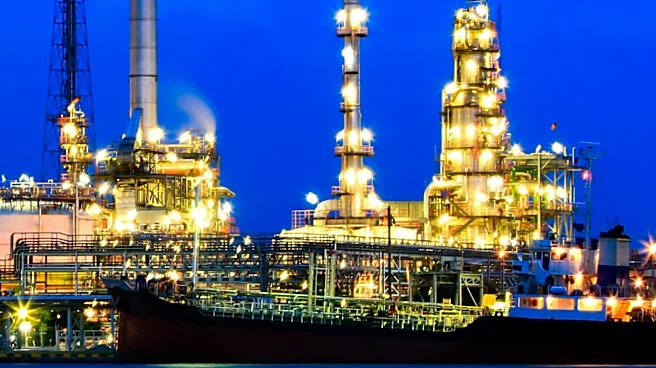
China's petrochemical stockpiles, which previously served as a buffer against supply shocks, are nearing depletion due to the US-Iran war. This conflict has severed Persian Gulf oil and naphtha flows, critical feedstocks for China's chemicals sector.
Iranian crude, a preferred input for many Chinese private refiners, has completely dried up under the US blockade. Naphtha exports from the region remain constrained, even as some broader energy flows from the Gulf have partially recovered. By October 2026, approximately 95% of end-use chemical inventories built up in 2025 have been drawn down, according to Goldman Sachs. This rapid depletion is impacting aromatics, rubber, resins, and plastics, leading to rising wholesale prices. Beijing's policy response, prioritizing gasoline and diesel output, further accelerated inventory depletion by pushing refiners to draw down petrochemical stockpiles rather than dedicate capacity to chemical production.
Why It's Important?
The depletion of China's petrochemical stockpiles has significant implications for global industrial markets. China is a major supplier of petrochemicals and downstream products, meaning price increases in its wholesale markets tend to export globally. The inventory squeeze has already led to a 5% rise in China's producer price index since February, reflecting increased feedstock costs throughout the supply chain. Manufacturers worldwide that source Chinese chemicals or finished goods are now absorbing higher input costs. This situation creates inflationary pressure across various manufacturing sectors that depend on these materials, such as automotive (rubber for tires), electronics (electrical insulation), and packaging (plastic bottles). While the immediate impact is higher prices, the long-term effect could be a re-evaluation of global supply chain dependencies and a push for diversification of feedstock sources to mitigate geopolitical risks.
What's Next?
The immediate future will likely see continued upward pressure on prices for aromatics, rubber, resins, and plastics as global buyers are compelled to accept higher costs. JPMorgan's Parsley Ong anticipates that buyers will 'just have to accept a higher price,' though a sharp rally is not expected, but rather a repricing of a tight market. ICIS principal Salmon Aidan Lee suggests this inflation is short-term, driven by feedstock costs, and will ease once underlying overcapacity reasserts itself. However, the normalization of feedstock flows and recovery of margins are crucial for this to happen. The industry will be closely watching for any developments in the US-Iran conflict and its impact on Persian Gulf oil and naphtha flows, as these are critical for replenishing China's depleted stockpiles and stabilizing global petrochemical markets.
Beyond the Headlines
This situation highlights the vulnerability of global supply chains to geopolitical conflicts and the interconnectedness of international markets. China's reliance on Persian Gulf feedstocks, particularly Iranian crude, underscores the strategic importance of energy security and the potential for political tensions to disrupt economic stability. The accidental nature of China's previous petrochemical buffer, a byproduct of overcapacity, reveals how unforeseen events can expose underlying structural weaknesses. While the current price increases are attributed to short-term disruptions, the incident could prompt a broader re-evaluation of industrial resilience and the need for more robust strategic reserves globally. It also brings into focus the ethical considerations of prioritizing fuel production over chemical feedstocks during crises, and the ripple effects such decisions have on diverse manufacturing sectors worldwide.