


What's Happening?
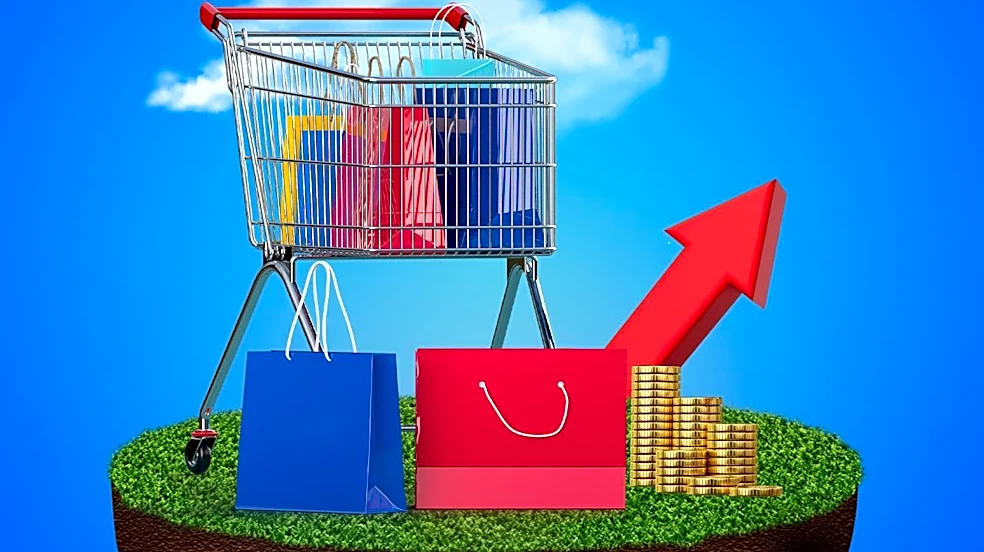
The National Retail Federation (NRF), the largest retail trade group in the U.S., forecasts that American consumers will collectively spend $1.01 trillion this November and December, marking a 4.2% increase from the previous year. This projection suggests
a healthy holiday shopping season despite persistent inflation and uneven consumer confidence. According to NRF President and CEO Matthew Shay, consumers have consistently prioritized holiday spending on loved ones throughout the year, a pattern expected to continue. Economists note that about half of the anticipated growth in sales is attributed to higher consumer prices, rather than an increase in the volume of goods sold. Higher-income shoppers, buoyed by stock market gains, are expected to drive a significant portion of this spending.
Why It's Important?
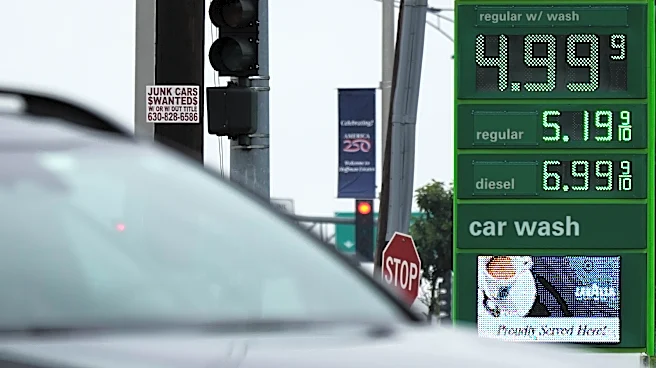
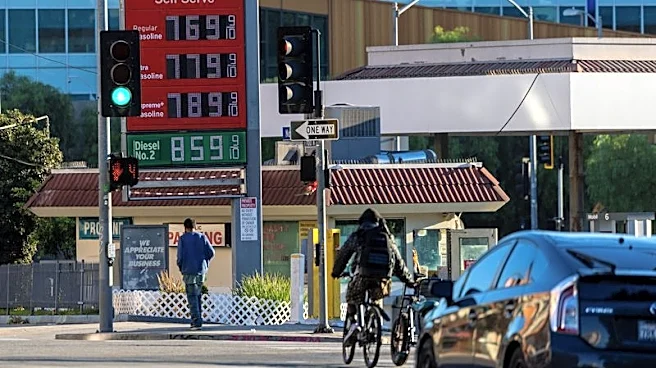
This forecast is significant as holiday sales account for 19% of the U.S. retail industry's annual sales and serve as a crucial indicator of consumer health and the broader economy. Consumer spending drives approximately 70% of U.S. gross domestic product, making a strong holiday season vital for economic stability. The projection, which is above the average gains from the last 20 years (excluding pandemic-era spending), suggests resilience in consumer behavior despite economic headwinds. However, the fact that a substantial portion of the growth is due to inflation rather than increased purchasing volume highlights the ongoing challenge of rising prices. This also points to a growing disparity, with higher-income shoppers sustaining spending while lower-income individuals are more affected by increased fuel prices and other financial pressures, potentially leading to changes in shopping habits like trading down to lower-priced brands or increased reliance on credit.
What's Next?
Retailers and economists will closely monitor actual holiday sales figures to gauge the state of the consumer beyond the holiday season and inform expectations for the year ahead. The Labor Department's recent inflation snapshot, showing accelerated U.S. inflation due to rising gas prices and other goods and services, indicates that financial pressures on shoppers are ongoing. While the Commerce Department reported a solid 0.8% increase in September retail sales, gasoline purchases constituted a large part of this gain. Experts anticipate that higher pump prices will continue to squeeze lower-income shoppers, while higher-income shoppers will maintain discretionary purchases. This divergence in spending power could lead to continued shifts in consumer behavior, such as earlier shopping and increased use of credit cards or 'buy now, pay later' plans, as consumers adapt to the inflationary environment.
Beyond the Headlines
The forecast reveals a deeper societal trend: a disconnect between dismal consumer confidence surveys and actual spending behavior. This suggests that while consumers may express concerns about the economy, their actions, particularly during culturally significant periods like the holidays, reflect a continued willingness to spend. This phenomenon could be attributed to various factors, including the psychological importance of holidays, the availability of credit, and the uneven impact of inflation across different income brackets. The reliance on higher-income shoppers to fuel a significant portion of holiday spending also underscores growing economic inequality. This trend could lead to a more bifurcated retail market, where luxury and discount segments thrive, while middle-tier retailers face greater challenges in attracting price-sensitive consumers. Understanding this complex interplay between sentiment, spending, and economic stratification is crucial for a comprehensive view of the U.S. consumer landscape.