

What's Happening?
Skydance has announced plans to combine Warner Bros. Television Group and Paramount Television Studios into a new entity named Warner Bros. Television Studios. This new studio is slated to officially launch in early 2027. Until then, both Warner Bros. Television Group and Paramount Television Studios will
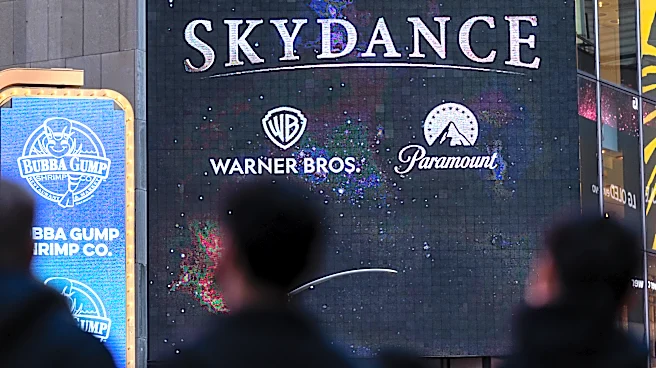
continue to operate independently. Channing Dungey and Matt Thunell have been appointed as Presidents of the new Warner Bros. Television Studios. They will report to George Cheeks, who serves as co-chair and Chief Content Officer for Skydance TV. This strategic move follows Paramount's recent $110 billion acquisition of Warner Bros. Discovery (WBD), completed nearly two months prior to this announcement. The merger aims to consolidate creative talent and resources from two major industry players.
Why It's Important?
The consolidation of Warner Bros. Television Group and Paramount Television Studios under Skydance is a significant development in the entertainment industry. This merger will create a formidable production organization with enhanced creative talent, resources, and a vast portfolio of acclaimed programming and iconic franchises. The combined entity will possess the global scale necessary to compete at the highest level in television production. For Skydance, this move strengthens its position as a major content provider, capable of delivering for its own platforms and third-party partners across the industry. The leadership of Channing Dungey and Matt Thunell, both experienced executives, is expected to foster bold ideas and deliver programming that resonates with global audiences, potentially reshaping the landscape of television content creation and distribution.
What's Next?
The immediate next step involves the continued independent operation of Warner Bros. Television Group and Paramount Television Studios until the official launch of the new Warner Bros. Television Studios in early 2027. During this interim period, Dungey and Thunell will likely begin the strategic planning and integration processes necessary to merge the two storied studios effectively. This will involve aligning creative visions, consolidating operational structures, and identifying synergies to maximize efficiency and output. Stakeholders, including creative talent, network partners, and investors, will be closely watching how this integration unfolds and what new programming initiatives emerge from this combined powerhouse. The success of this merger will depend on the seamless transition and the ability of the new leadership to leverage the combined strengths of both entities.
Beyond the Headlines
This merger represents a broader trend of consolidation within the media and entertainment industry, driven by the increasing demand for high-quality content across various streaming platforms and traditional broadcasters. The creation of a single, powerful television studio from two established entities could lead to significant shifts in how content is developed, produced, and distributed. It may also impact the competitive landscape, potentially leading to fewer but larger content creators dominating the market. The ethical implications could include concerns about creative diversity and the potential for reduced opportunities for independent creators if major studios become too dominant. Legally, such large-scale mergers often face scrutiny from antitrust regulators, though the announcement suggests this has been navigated. Culturally, the combined studio's output will likely influence global entertainment trends, given its vast reach and iconic franchises.