




What's Happening?
Virtual Design and Construction (VDC) is transforming the Architecture, Engineering, and Construction (AEC) industry by integrating 3D modeling and data to improve collaboration, streamline project planning, and reduce costly errors. VDC creates a shared,
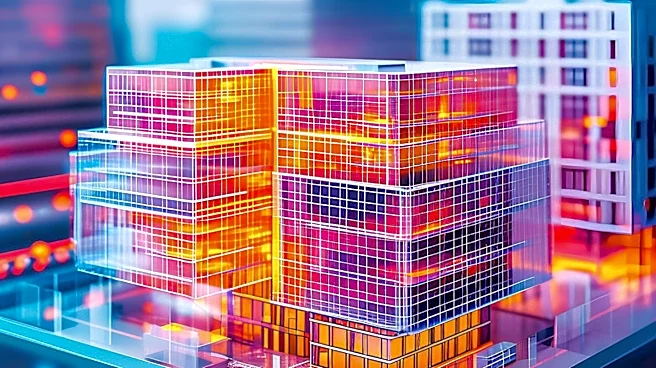
cloud-based workspace where all project stakeholders—architects, engineers, contractors, and owners—can access the most current information. This approach leverages tools such as Building Information Modeling (BIM), clash detection, 4D scheduling, and digital twins. BIM provides a digital representation of a building's characteristics, while clash detection identifies conflicts between systems before construction begins. 4D scheduling integrates time data with 3D models for visual timelines, and digital twins offer real-time virtual replicas for monitoring and optimization. VDC aims to coordinate people, data, and models around a single, accurate source of truth, significantly reducing rework often caused by miscommunications and bad data.
Why It's Important?
The widespread adoption of Virtual Design and Construction (VDC) is critical for the U.S. construction industry, which frequently grapples with budget overruns, schedule delays, and quality issues. Research indicates that a significant portion of construction rework stems from engineering and design errors that could be identified earlier. VDC directly addresses these challenges by enabling proactive problem-solving and enhancing communication across project teams. By providing a unified platform for data and models, VDC minimizes misinterpretations and ensures that all parties are working from the same, accurate information. This leads to more efficient project execution, reduced material waste, and fewer on-site conflicts, ultimately saving time and money for businesses and clients. For the broader economy, increased efficiency in construction can translate to more timely infrastructure development and reduced costs for commercial and residential projects.
What's Next?
The future of Virtual Design and Construction (VDC) is moving towards even greater integration and accessibility. Reality capture technologies are becoming faster and more affordable, allowing for continuous monitoring of construction progress rather than periodic checks. This will enable deviations between design and reality to be detected almost immediately, shrinking the window for errors to go unnoticed. Tighter integration with other construction tools, such as Autodesk and Procore, will ensure that captured conditions are seamlessly incorporated into existing workflows. Furthermore, advancements in artificial intelligence are expected to assist in design and progress verification, flagging potential deviations between scans and models to enhance team efficiency. These capabilities are also becoming more accessible to smaller firms, democratizing VDC and allowing a broader range of projects to benefit from its advantages.
Beyond the Headlines
VDC represents more than just a technological upgrade; it signifies a fundamental shift in the culture of the AEC industry towards transparency, collaboration, and data-driven decision-making. By creating a shared digital environment, VDC breaks down traditional silos between disciplines, fostering a more integrated and accountable project team. This collaborative paradigm can lead to innovative solutions and a higher quality of finished products, from buildings to infrastructure. The ethical implications include greater accountability for design and construction professionals, as every decision and change is documented within the digital model. Moreover, the ability to simulate and visualize projects in detail can lead to more sustainable designs, allowing for optimization of energy use and material selection before physical construction begins. VDC is not just about building smarter; it's about building more responsibly and collaboratively.