






What's Happening?
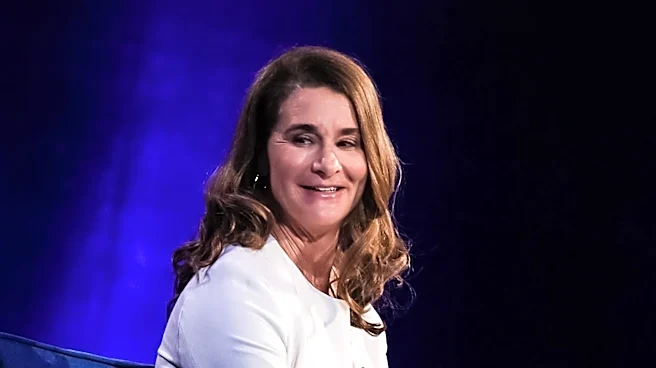
Melinda French Gates, founder of Pivotal and co-founder of the Gates Foundation, is highlighting the critical need for employers to support caregivers in the workforce. She emphasizes that caregiving responsibilities are a primary reason women are leaving
their jobs, impacting both individual families and the broader economy. French Gates points out that the cost of childcare in 45 states now exceeds typical mortgage or rent payments, making it financially unfeasible for many families to continue working while paying for care. This often leads to women stepping away from their careers, resulting in lost income and career setbacks. She argues that when women are unable to fully participate in the workforce, society loses out on their insights and innovations. Employers also incur significant costs due to absenteeism and turnover caused by childcare disruptions. French Gates cites examples like Guild, a company that offers on-site childcare, demonstrating that investments in care-related benefits can yield substantial returns, such as reduced absenteeism and increased productivity.
Why It's Important?
The issue of employer support for caregivers is crucial for the U.S. economy and workforce stability. The current system disproportionately affects women, leading to a significant loss of talent and economic contribution. When women leave the workforce due to caregiving demands, it exacerbates gender inequality and limits economic growth. The financial burden of childcare and eldercare is a national challenge that impacts household budgets and overall consumer spending. By advocating for employer-provided benefits like paid family leave, flexible work schedules, and on-site childcare, French Gates is pushing for systemic changes that could retain skilled workers, improve employee morale, and boost productivity. This shift could lead to a more inclusive and resilient workforce, benefiting businesses through reduced turnover and increased output, and families through greater financial stability and career progression.
What's Next?
The advocacy from figures like Melinda French Gates is likely to intensify discussions among U.S. businesses, policymakers, and community leaders regarding the implementation of more robust caregiver support systems. Companies may face increased pressure to evaluate and expand their care-related benefits, potentially leading to more widespread adoption of policies such as paid family and medical leave, flexible work arrangements, and subsidized childcare options. Policymakers might also be prompted to consider legislative measures that incentivize employers to offer these benefits or provide direct support to families for care costs. The ongoing dialogue could foster collaborations between employers, childcare providers, and communities to create more comprehensive and accessible care solutions, ultimately aiming to reduce the barriers that prevent caregivers from fully participating in the workforce.
Beyond the Headlines
Beyond the immediate economic and workforce implications, the call for greater employer support for caregivers touches upon deeper societal values concerning family, gender roles, and corporate responsibility. The current challenges highlight a systemic undervaluation of care work, which disproportionately falls on women. Addressing this issue requires a cultural shift where caregiving is recognized not as a personal burden but as a societal responsibility that impacts economic health. The long-term implications could include a redefinition of workplace norms, promoting a more empathetic and inclusive corporate culture. It also raises ethical questions about the role of businesses in supporting the well-being of their employees beyond traditional compensation. A successful integration of caregiving support into workplace policies could lead to a more equitable society, where individuals are not forced to choose between career advancement and family responsibilities, fostering greater overall societal well-being and gender equality.