







What's Happening?
Utah leaders recently concluded a 10-day trade mission to Argentina, aiming to forge partnerships in critical mineral processing and saline lake management. The delegation, which included Joel Ferry, executive director of Utah’s Department of Natural
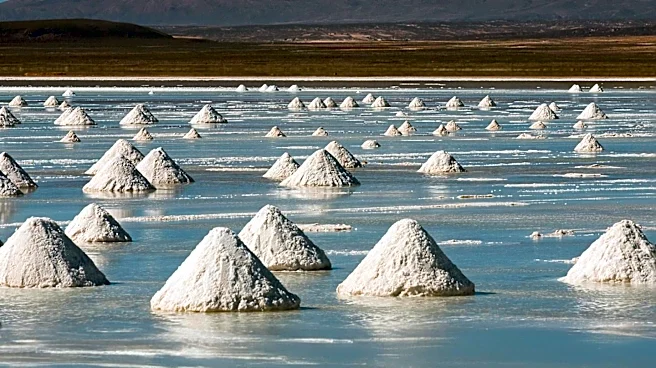
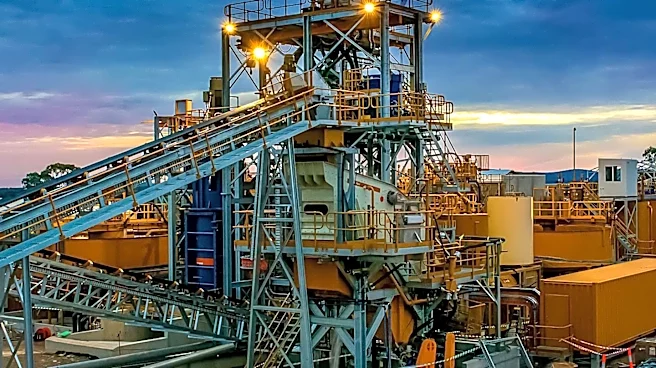
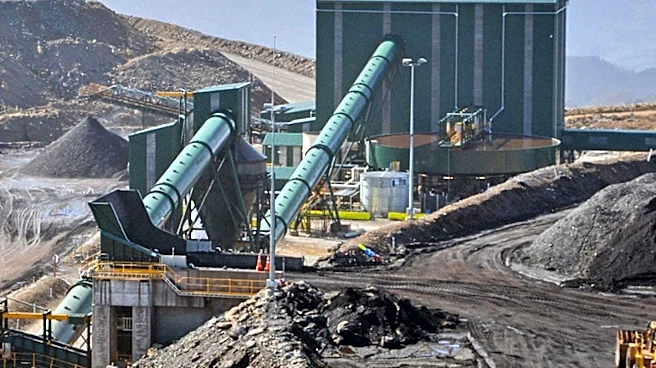
Resources, and Jeff Moss, executive director of the Governor’s Office of Economic Opportunity, visited mineral-rich Argentine provinces. A key objective of Utah's 'Mission Critical' initiative is to increase the state's mineral processing capabilities, with a goal to meet 25% of the United States' critical mineral demands and process at least 50% of mined minerals within Utah. Currently, many ores mined in the U.S. are shipped to China for processing. The mission also explored collaboration on managing shrinking saline lakes, as both Utah's Great Salt Lake and Argentina's Mar Chiquita Lake face similar ecological challenges. Utah hopes to learn from Argentina's experiences and vice versa, with plans for further visits and potential engagement from Utah Governor Spencer Cox.
Why It's Important?
This initiative is crucial for bolstering U.S. economic security and reducing reliance on foreign nations, particularly China, for critical minerals. China currently controls over 90% of the world’s refinery production of key electronic components, 70% of rare earth elements, and over 60% of global titanium mining and aluminum smelter production. This dominance gives China significant economic leverage, as it could restrict global access to critical mineral products, potentially halting various economic activities, from smartphone production to advanced weapons systems. By increasing domestic processing, Utah aims to mitigate these supply chain vulnerabilities and strengthen the U.S. defense industrial base. The collaboration on saline lake management is also significant, as the Great Salt Lake's ecological health impacts Utah's economy, including its brine shrimp population and related industries. Sharing research and management strategies with Argentina could provide invaluable insights for both regions facing similar environmental threats.
What's Next?
Utah leaders plan to return to Argentina in the coming months to solidify the new partnerships, with a potential visit from Utah Governor Spencer Cox within the next year or two. The state's 'Mission Critical' initiative will continue to focus on cutting the average permitting timeline for mineral projects by 50% and ensuring that a significant portion of mined minerals are processed domestically. This will involve ongoing efforts to attract investment and develop infrastructure for mineral processing within Utah. Furthermore, the collaboration on saline lake research and management is expected to continue, potentially involving partnerships between Utah and Argentine universities. The success of these efforts could serve as a model for other U.S. states seeking to enhance their critical mineral supply chains and address environmental challenges through international cooperation.
Beyond the Headlines
The push for domestic critical mineral processing highlights a broader strategic shift in U.S. policy to re-shore essential industries and reduce geopolitical dependencies. This move is not just about economic competitiveness but also national security, as critical minerals are vital for advanced technologies and defense systems. The environmental implications of increased mining and processing activities in Utah will require careful management, balancing economic goals with ecological preservation. The partnership with Argentina also underscores the growing recognition of shared environmental challenges, such as water scarcity and the health of saline ecosystems, which transcend national borders. This collaboration could foster a new model of international cooperation where countries facing similar environmental and resource-related issues work together to find sustainable solutions, potentially influencing future U.S. foreign policy and trade agreements.