








What's Happening?
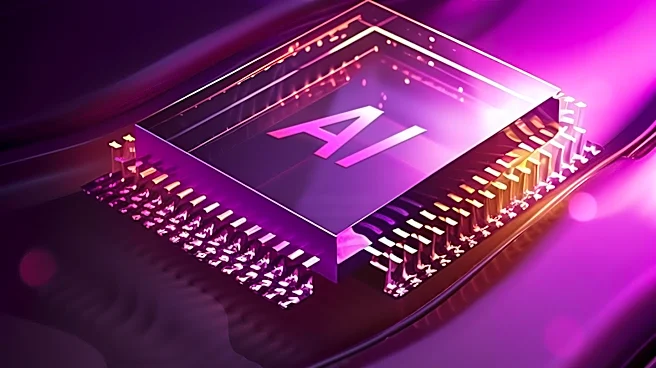
Elon Musk's SpaceX has acquired Mesh Optical Technologies, a startup founded by former SpaceX engineers, after receiving approval from the US Federal Trade Commission (FTC). The acquisition aims to advance high-speed communication infrastructure for AI
and data centers. Mesh Optical, established by Travis Brashears, Cameron Ramos, and Serena Grown-Haeberli, focuses on developing optical communication links, initially for Starlink satellites, and now for terrestrial data centers. The startup's optical transceivers offer faster and more energy-efficient data transmission compared to traditional systems, facilitating lag-free management of large data streams necessary for supercomputers and AI model training. The acquisition is part of SpaceX's strategic expansion, enhancing its data center efficiency and supporting partnerships with AI developers like Anthropic and Google.
Why It's Important?
The acquisition of Mesh Optical by SpaceX is significant as it positions the company to become a leader in high-tech infrastructure, beyond its established role in rocketry. By integrating Mesh's advanced optical technologies, SpaceX can enhance the efficiency of its data centers, which are crucial for supporting AI development and global internet coverage. This move aligns with Musk's broader vision of space colonization and expanding internet access. The acquisition also highlights the growing importance of high-speed, energy-efficient data transmission technologies in the tech industry, potentially setting new standards for data center operations and AI training capabilities.
What's Next?
With the FTC's approval, the acquisition process is nearing completion, paving the way for SpaceX to integrate Mesh Optical's technologies into its operations. This integration could lead to the development of more efficient data centers both on Earth and in space, supporting SpaceX's partnerships with AI developers and its space colonization goals. The move may also prompt other tech companies to explore similar acquisitions or partnerships to enhance their data infrastructure capabilities, potentially leading to increased competition and innovation in the sector.