






What's Happening?
U.S. equity markets saw substantial fluctuations last week, with the S&P 500 falling 8.6%, marking its worst weekly decline in over 18 months and entering correction territory. The Dow lost 8%, the Nasdaq declined 10%, and the Russell 2000 fell approximately
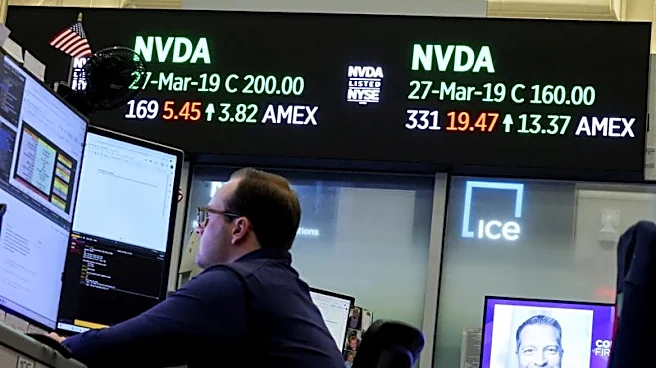
7.5%. This downturn was largely attributed to a rapid repricing of AI-related stocks and growth expectations. Technology was the weakest sector, while consumer staples performed best. However, markets experienced a significant reversal on Monday, November 23, with equities rising substantially. This rebound was primarily driven by news of Jensen Huang's return as CEO of NVIDIA, which had seen its shares fall nearly 23% last week despite reporting exceptional earnings. NVIDIA's quarterly revenue reached $115.8 billion, more than double the previous year, with data center revenue increasing by 110%. The company also projected $130 billion in revenue for the upcoming quarter and a 75% revenue growth for the fiscal year. Despite these strong results, concerns about management transition, customer financing, and the sustainability of AI capital spending had previously weighed on the stock.
Why It's Important?
The recent market volatility highlights investor sensitivity to valuations and growth projections within the AI sector, a critical component of current technological and economic expansion. The sharp decline and subsequent rebound in AI-related stocks, particularly NVIDIA, underscore the significant influence of key leadership and market sentiment on high-growth sectors. The repricing of AI spending indicates that investors are scrutinizing the long-term sustainability and financing of the massive AI buildout, moving beyond initial enthusiasm to a more critical assessment of underlying fundamentals. This shift affects not only tech companies but also broader economic indicators, as AI investment cycles impact enterprise tech budgets and overall spending. The market's reaction also demonstrates the role of high-quality bonds as a safe haven during equity sell-offs, with Treasury prices rising as stocks, gold, copper, and Bitcoin declined, suggesting a shift in market concern towards growth and liquidity rather than solely inflation.
What's Next?
The upcoming week, shortened by the Thanksgiving holiday, will bring further economic data that could influence market direction. Key reports include the second estimate of third-quarter GDP, durable goods orders, jobless claims, new home sales data, and the Federal Reserve's Beige Book. The most central report will be the October Personal Consumption Expenditures Price Index (PCE), the Fed’s preferred inflation measure, with core inflation expected to be around 3.2%. A reading near this estimate would mark the 67th consecutive month above the Fed's 2% target, potentially keeping another Fed rate increase in play. Earnings reports from Dell and HP on Tuesday will also be closely watched for insights into enterprise tech budgets, AI server demand, and hardware companies' ability to maintain margins. Lighter trading volumes around the Thanksgiving holiday could lead to exaggerated price movements, making market conditions potentially more volatile.
Beyond the Headlines
The intense focus on AI stock valuations and the rapid market swings reveal a deeper narrative about the maturity of the AI investment cycle. While demand for AI technologies remains strong, investors are increasingly questioning the pace and scale of capital expenditure, suggesting a transition from an early-stage speculative phase to a more discerning evaluation period. This could lead to a more selective investment environment where companies with clear profitability pathways and sustainable business models are favored over those with high growth but uncertain long-term returns. The market's reaction to NVIDIA's leadership change also highlights the outsized influence of key figures in driving investor confidence, particularly in innovative sectors. Furthermore, the continued elevation of inflation above the Fed's target, as indicated by the PCE, suggests ongoing monetary policy challenges that could impact borrowing costs and investment decisions across all sectors, potentially dampening future growth if tighter financial conditions persist.