




What's Happening?
Dutch Design Week 2026, held in Eindhoven every October, transformed the city into a hub for experimental and radical design. The event spanned over 120 locations, featuring more than 2,500 designers and attracting over 300,000 visitors. This year's theme,
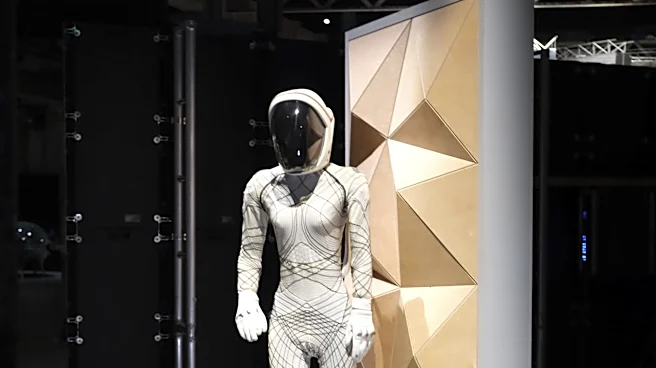
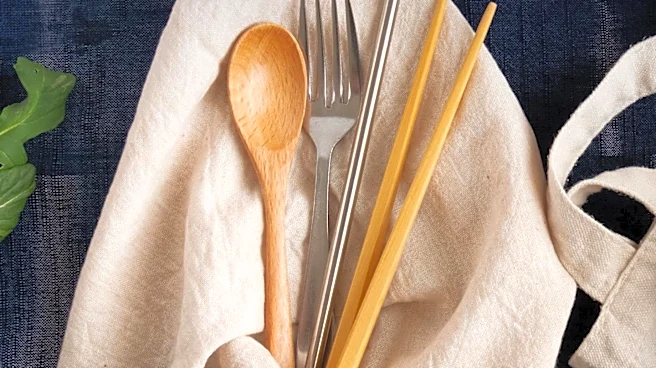
R.A.W. (Rebel, Authentic, Worth), emphasized rugged and unrefined work, contrasting with a trend towards cleaner lines in many festivals. The festival showcased a wide array of projects, including biodesign, new materials, and AI-driven innovations, with both design students and established studios participating. The focus extended beyond the design object itself, highlighting research and speculative practices. Notable installations included Polestar's 'We Harvest Wind' by Thijs Biersteker, which focused on renewable energies using blades made from recycled PET bottles, and Christien Meindertsma's 'Local Linoleum,' proposing linoleum as a solid, re-pliable building material made from entirely local resources. Michele Martelloni presented 'Systemic Reef,' an artificial reef structure made from local marble powder, while Jasmin Ozturkkan Menda's 'RELISH' explored food rituals through wearable glass and ceramic tableware. The Taiwan Pavilion's 'Island Under Pressure' exhibition demonstrated how geopolitical, agricultural, climate, industrial, and manufacturing pressures shape Taiwanese design.
Why It's Important?
The Dutch Design Week 2026 is significant as it highlights the evolving landscape of design, pushing boundaries beyond traditional aesthetics and functionality. The emphasis on 'R.A.W.' design signals a potential shift in industry trends towards more authentic, sustainable, and experimental approaches, which could influence global design markets and consumer preferences. The showcase of biodesign and new materials, such as Meindertsma's re-pliable linoleum and Martelloni's marble powder reef, underscores a growing commitment to environmental sustainability and circular economy principles within the design sector. These innovations could inspire new manufacturing processes and material sourcing strategies, impacting industries from construction to consumer goods. Furthermore, the inclusion of AI-driven projects indicates the increasing integration of advanced technology into design, potentially leading to more personalized, efficient, and innovative product development. The festival's focus on research and speculative practices also fosters critical thinking and problem-solving, addressing contemporary challenges like climate change and resource scarcity through creative solutions. The event serves as a crucial platform for emerging designers, providing them with exposure and opportunities to shape future design paradigms.
What's Next?
The innovations and themes presented at Dutch Design Week 2026 are likely to influence future design trends and industry practices. The focus on sustainability and local sourcing, exemplified by projects like 'Local Linoleum' and 'Systemic Reef,' could lead to increased adoption of eco-friendly materials and production methods across various sectors. Designers and manufacturers may explore more regional supply chains and waste-to-resource models. The integration of AI in design is expected to continue, potentially leading to more sophisticated tools for prototyping, material optimization, and personalized product creation. We might see further development in wearable technology and interactive design, as suggested by Menda's 'RELISH' project, which redefines user interaction with everyday objects. The festival's emphasis on 'rebel' and 'authentic' design could also encourage a broader acceptance of unconventional aesthetics and functional approaches, challenging established norms in product design and architecture. Future design events and academic programs may increasingly incorporate these themes, fostering a new generation of designers focused on social and environmental impact.
Beyond the Headlines
Beyond the immediate innovations, Dutch Design Week 2026 reflects deeper societal shifts towards conscious consumption and environmental responsibility. The festival's theme, R.A.W., can be interpreted as a critique of mass-produced, often unsustainable, consumer goods, advocating for designs that are more honest, durable, and meaningful. This philosophical stance could contribute to a broader cultural movement that values craftsmanship, ethical sourcing, and the lifecycle of products. The exploration of materials like recycled PET bottles and marble powder waste highlights a growing awareness of industrial byproducts as valuable resources, potentially driving policy changes and investment in waste management and material science. The event also underscores the role of design as a tool for social commentary and problem-solving, as seen in the Taiwan Pavilion's response to geopolitical pressures or HAK Studio's JOYN collection for older adults. This positions design not just as an aesthetic pursuit but as a critical discipline capable of addressing complex global challenges and improving quality of life, fostering a more inclusive and sustainable future.