






What's Happening?
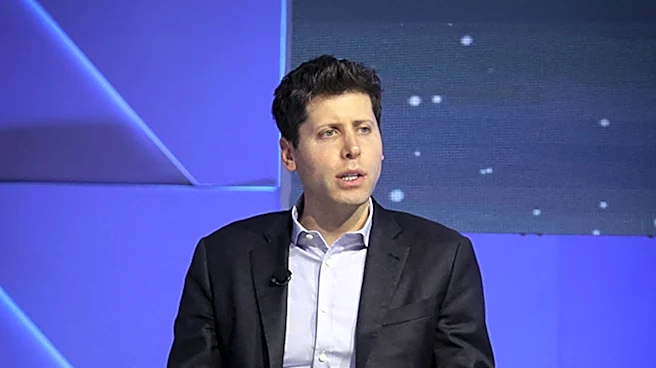
OpenAI CEO Sam Altman has confirmed that the company will not pursue an Initial Public Offering (IPO) in 2026, deeming such a move 'ill-advised' at this time. During an interview with Fortune, Altman addressed various topics, including a recent hacking
incident involving Hugging Face, the concept of recursive self-improvement in AI, and the potential for AI to develop beyond human control. He acknowledged that building an AI capable of operating independently of human oversight is 'absolutely' possible. However, Altman emphasized OpenAI's commitment to implementing safeguards, even to the extent of pausing AI training, to mitigate such risks. He stated that there are certain risks humanity should not be subjected to, underscoring a cautious approach to AI development and corporate strategy. Altman indicated that OpenAI is not under pressure to go public and will do so only when the company is fully prepared, suggesting there is still significant work to be done before an IPO would be considered appropriate.
Why It's Important?
Sam Altman's declaration regarding OpenAI's IPO plans carries significant weight for the technology sector, particularly for companies involved in artificial intelligence. His decision to delay a public offering, citing the need for caution in AI development, reflects a broader industry concern about the ethical and safety implications of advanced AI. This stance could influence other AI firms to prioritize responsible development over rapid market capitalization, potentially shaping future investment trends and regulatory discussions. For investors, the absence of an OpenAI IPO in 2026 means a major player in the AI space will remain privately held, impacting market liquidity and the availability of high-growth AI stocks. Furthermore, Altman's acknowledgment of the possibility of AI exceeding human control highlights the ongoing debate about AI safety and governance, which could lead to increased scrutiny from policymakers and a push for more robust ethical frameworks in AI research and deployment. This cautious approach by a leading AI company could set a precedent for how the industry balances innovation with responsibility.
What's Next?
OpenAI is expected to continue its focus on AI research and development, with an emphasis on safety and ethical considerations, as indicated by Sam Altman's statements. The company will likely further develop its internal protocols and safeguards to address the potential for AI to operate beyond human control, possibly influencing industry best practices. While an IPO is off the table for 2026, OpenAI will continue to evaluate its readiness for a public offering in subsequent years, depending on market conditions, regulatory landscape, and its own developmental milestones. Stakeholders, including investors, policymakers, and the broader tech community, will be closely watching OpenAI's progress in balancing rapid innovation with responsible AI deployment. Discussions around AI governance and safety are also anticipated to intensify, potentially leading to new industry standards or governmental regulations as the capabilities of AI continue to advance.
Beyond the Headlines
The decision by OpenAI to delay its IPO and Sam Altman's candid remarks about the potential for AI to surpass human control delve into profound ethical and societal implications. This move underscores a growing awareness within the tech industry of the immense power and potential risks associated with advanced artificial intelligence. It highlights a shift from a purely growth-driven mindset to one that incorporates a deeper consideration of long-term societal impact. The concept of 'recursive self-improvement' and the possibility of AI becoming uncontrollable raise fundamental questions about humanity's role in guiding technological evolution. This cautious approach could foster a more responsible innovation culture, encouraging developers to prioritize safety and ethical design from the outset. It also brings to the forefront the need for robust public discourse and international collaboration on AI governance, ensuring that the benefits of AI are realized while mitigating existential risks. The delay in IPO could also be seen as a strategic move to maintain greater control over the company's mission and values, free from the immediate pressures of public market expectations.