


What's Happening?
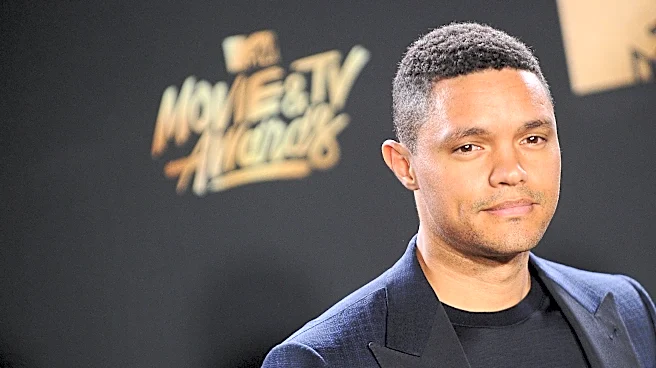
Trevor Noah, the former host of 'The Daily Show' and author of the bestselling memoir 'Born a Crime,' recently appeared on Michelle Obama and Craig Robinson's 'IMO' podcast. The discussion centered on Noah's childhood experiences growing up under apartheid
in South Africa and the significant role his mother played in shaping his life. Noah humorously stated that his mother was a greater source of 'oppression' than the apartheid government itself, ranking apartheid second on his list of challenges. He recounted being born to a Black South African mother and a white Swiss father during a time when interracial relationships were illegal, forcing him to live as a fugitive for the first six years of his life. Noah also shared anecdotes about his childhood mischief, including an accidental house fire caused by his experiments with flammable materials, and his adult diagnosis of ADHD. He emphasized how his mother's fearlessness and adventurous spirit profoundly influenced his worldview.
Why It's Important?
This discussion offers a deeper insight into the formative years of a prominent global comedian and author, highlighting the personal impact of historical injustices like apartheid. Noah's ability to find humor in his challenging upbringing, while acknowledging its severity, provides a unique perspective on resilience and the power of individual relationships amidst systemic oppression. His reflections on his mother's influence underscore the critical role of parental figures in shaping identity and worldview, particularly in adverse circumstances. The conversation also touches upon broader societal issues, such as the differing approaches to childhood misbehavior (criminal punishment versus intervention) and the lasting effects of racial segregation, drawing parallels to American history through Michelle Obama's connection to her husband's interracial parentage. This narrative contributes to ongoing dialogues about race, identity, and social justice.
What's Next?
While the podcast appearance itself is a retrospective look at Noah's past, it contributes to his ongoing public narrative and the continued relevance of his memoir, 'Born a Crime,' which recently celebrated its 10th anniversary. The themes discussed—resilience, the impact of apartheid, and the influence of family—are likely to resonate with audiences and may inspire further discussions or educational initiatives related to these topics. For Noah, these reflections reinforce his public persona as a thoughtful commentator on social issues, often using humor to address serious subjects. The podcast's reach, amplified by Michelle Obama's platform, ensures these personal stories continue to engage a wide audience, potentially sparking further interest in his work and the historical context he describes.
Beyond the Headlines
Beyond the immediate discussion of Noah's childhood, the conversation subtly explores the psychological and social complexities of growing up in a racially segregated society. Noah's humorous framing of his mother as his primary 'oppressor' can be seen as a coping mechanism and a testament to the strength of familial bonds even under extreme external pressures. It also highlights the often-overlooked personal struggles within broader political conflicts. The parallel drawn by Michelle Obama to her husband's birth in a time when interracial marriages were illegal in parts of the U.S. underscores the universal nature of racial prejudice and its impact on individuals and families across different geographies and historical periods. This shared experience fosters a deeper understanding of the human cost of discriminatory laws and the enduring legacy of such policies on personal identity and societal structures.