




What's Happening?
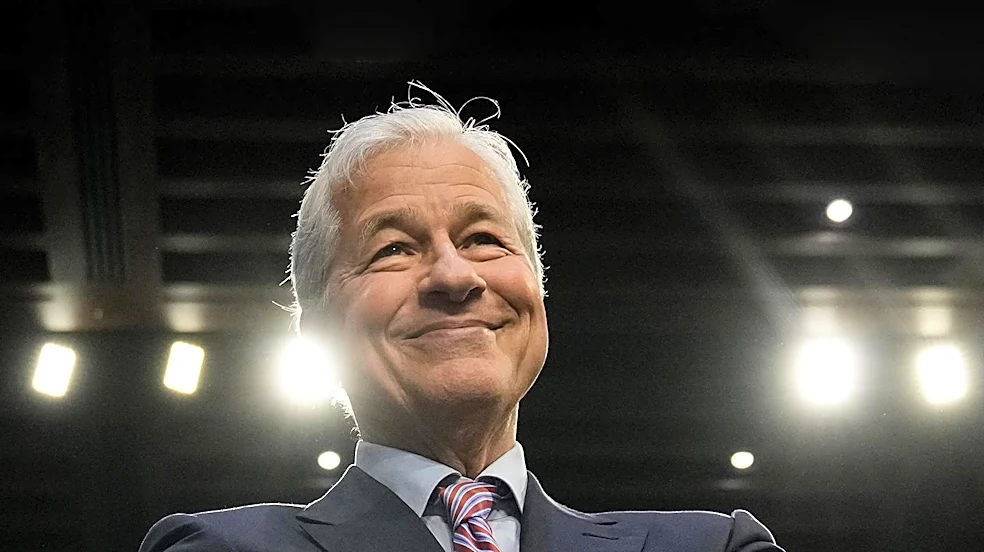
JPMorgan Chase CEO Jamie Dimon has conveyed a positive outlook on the U.S. economy, stating to the Wall Street Journal that the economy is currently in "good standing." Dimon cited several factors contributing to his optimistic assessment, including strong
economic growth, robust corporate profits, and low unemployment rates. However, he acknowledged persistent challenges such as "sticky" inflation, ongoing geopolitical tensions, and the issue of government debt. His comments come amidst a reported silent boom in business and manufacturing activity. Economist EJ Antoni from the Heritage Foundation largely concurs with Dimon's assessment, particularly regarding the strength of the economy, but emphasizes the negative impact of inflation on consumers, especially due to high energy prices.
Why It's Important?
Jamie Dimon's optimistic assessment from a prominent financial leader like the CEO of JPMorgan Chase can significantly influence market sentiment and investor confidence. His views, highlighting strong economic growth and corporate profits, could encourage further investment and business expansion, contributing to continued economic momentum. However, his acknowledgment of "sticky" inflation and geopolitical tensions underscores critical vulnerabilities that could derail this positive trajectory. The discrepancy between overall economic strength and consumer sentiment, largely driven by high energy prices, indicates a potential political and social challenge. If consumers continue to feel the pinch of inflation despite a strong economy, it could lead to public dissatisfaction and pressure on policymakers to address cost-of-living issues, potentially impacting future economic policies and electoral outcomes.
What's Next?
The persistence of "sticky" inflation, particularly high energy prices, remains a key concern that could temper the overall economic optimism. Economist EJ Antoni suggests that resolving geopolitical conflicts, specifically the wars in Iran and Ukraine, would be crucial in bringing down energy prices and improving consumer sentiment. Should these conflicts continue, or if new geopolitical tensions arise, energy prices could remain elevated, continuing to impact household budgets and potentially slowing consumer spending. Policymakers will likely face ongoing pressure to address inflation and its effects on the public. The interplay between strong economic fundamentals and the challenges of inflation and geopolitical instability will continue to shape the U.S. economic landscape in the near future.
Beyond the Headlines
The divergence between a strong overall economy and the public's negative perception due to inflation highlights a critical disconnect that extends beyond mere economic indicators. This situation can erode public trust in economic institutions and government policies, even when traditional metrics suggest prosperity. The focus on energy prices as a primary driver of consumer discontent also underscores the global interconnectedness of economic well-being, where international conflicts directly impact domestic living costs. This scenario could lead to a re-evaluation of economic policy frameworks, potentially pushing for greater emphasis on supply-side solutions and energy independence to insulate the U.S. economy from external shocks, while also highlighting the need for effective communication strategies to bridge the gap between economic data and lived experiences.