
What's Happening?
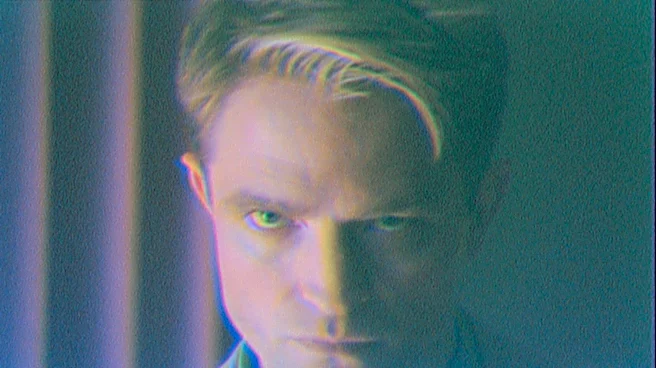
Actor Robert Pattinson has indicated that his portrayal of Batman, as seen in Matt Reeves' 'The Batman,' would be challenging to integrate into James Gunn's broader DC Universe. According to Variety, Pattinson believes the distinct tone and style of his Batman iteration
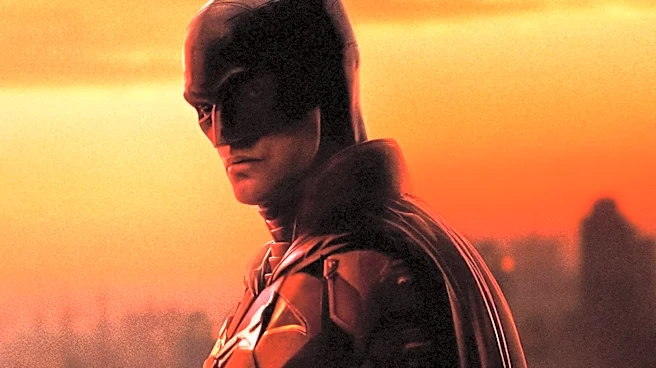
make it difficult to exist outside its established world. He emphasized that playing the character demands significant commitment due to the film's dark atmosphere and extensive production schedule. Pattinson's 'The Batman' (2022) presented a more grounded, darker interpretation of Bruce Wayne, focusing on a psychological crime noir narrative. The upcoming sequel, 'The Batman Part II,' scheduled for release on February 18, 2028, will continue Reeves' specific vision for Gotham and Pattinson's character, operating independently from Gunn's overarching DC Universe storyline. This separation highlights a divergence in creative approaches within the DC cinematic landscape.
Why It's Important?
This statement from Robert Pattinson is significant for the future of DC Comics adaptations in film, particularly concerning the interconnectedness of its cinematic universe. It reinforces the idea of distinct, separate continuities for major DC characters, potentially allowing for more diverse storytelling without the constraints of a shared universe. For fans, this means that while James Gunn's DC Universe will feature its own versions of iconic heroes, Matt Reeves' 'The Batman' series will maintain its unique, darker tone and narrative independence. This approach could appeal to audiences who prefer standalone, director-driven superhero films over a sprawling, interconnected franchise. It also impacts Warner Bros.' strategy for its DC properties, suggesting a multi-pronged approach rather than a singular, unified cinematic universe, which could influence future casting and production decisions for other DC characters.
What's Next?
The immediate next step for Robert Pattinson's Batman is the production and eventual release of 'The Batman Part II,' slated for February 18, 2028. This sequel will further develop Matt Reeves' vision of Gotham and Bruce Wayne, continuing the established darker and more grounded narrative. Concurrently, James Gunn's DC Universe will proceed with its own slate of films, including 'Superman' in 2025, which is expected to set a different, potentially lighter tone for the broader DC narrative. The clear separation articulated by Pattinson suggests that fans should not anticipate crossovers between these two distinct cinematic continuities. This dual-track approach means that both franchises will evolve independently, offering different interpretations of DC characters and stories to audiences.
Beyond the Headlines
The decision to keep Robert Pattinson's Batman separate from James Gunn's DC Universe reflects a broader trend in Hollywood towards balancing interconnected cinematic universes with standalone, artist-driven projects. While shared universes like the Marvel Cinematic Universe have proven highly successful, the challenges of maintaining creative consistency and narrative coherence across numerous films and characters have also become apparent. By allowing 'The Batman' to exist as its own entity, Warner Bros. and DC Films may be acknowledging the value of creative freedom and distinct artistic visions. This strategy could lead to more critically acclaimed and unique superhero films, as directors like Matt Reeves are empowered to fully realize their specific interpretations without being beholden to a larger continuity. It also raises questions about the long-term viability of strictly interconnected universes versus a more flexible model that permits both shared and independent narratives.