







What's Happening?
Knight-Swift Transportation CEO Adam Miller has indicated that intensified U.S. enforcement of cabotage restrictions is creating new challenges for Mexican truck drivers and is likely to tighten cross-border trucking capacity. Speaking at the WEX OTR
Summit in Jacksonville, Miller noted that U.S. authorities are increasing scrutiny of Mexican drivers operating across the border, including reviewing potential cabotage violations from previous employers. Cabotage generally refers to domestic transportation within a country by a foreign carrier, which is restricted under U.S. law. Miller cited instances where drivers faced visa revocations due to alleged violations committed while working for other carriers, not even with Knight-Swift's own operations. Knight-Swift Transportation, a major U.S. truckload carrier, operates in Mexico through its TransMex subsidiary. Despite maintaining strict compliance policies, Miller believes the heightened scrutiny could deter some Mexican drivers from entering the U.S., leading to a reduction in available capacity for cross-border freight.
Why It's Important?
The increased enforcement of U.S. cabotage restrictions carries significant implications for the U.S. trucking industry and broader supply chains. A tightening of cross-border trucking capacity could lead to higher transportation costs for goods moving between the U.S. and Mexico, impacting various industries that rely on this trade route, such as automotive. Businesses engaged in nearshoring initiatives, which involve relocating production closer to the U.S., might face unexpected logistical hurdles and increased operational expenses. For consumers, these increased costs could translate into higher prices for imported goods. The situation also highlights potential disruptions to the labor pool of cross-border truck drivers, as Mexican drivers may become more hesitant to operate in the U.S. due to the risk of visa issues, further exacerbating existing driver shortages in the industry. This could also influence future trade policies and discussions between the U.S. and Mexico regarding transportation regulations.
What's Next?
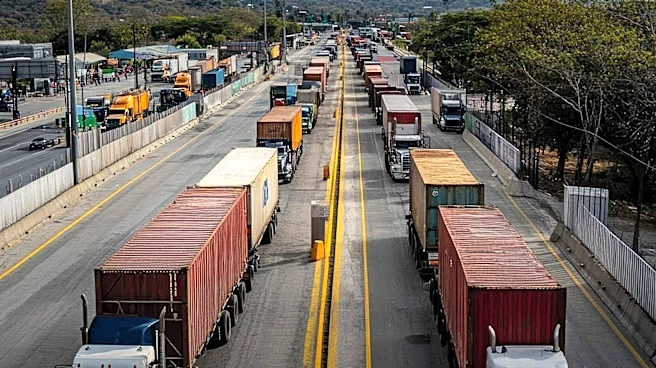
The immediate future may see continued tightening of cross-border trucking capacity as U.S. enforcement efforts persist. Mexican trucking companies and drivers are likely to face ongoing challenges, potentially leading to a reduction in the number of authorized drivers willing to transport international freight into the U.S. This could prompt U.S. businesses reliant on cross-border logistics to re-evaluate their supply chain strategies, potentially seeking alternative transportation methods or adjusting inventory levels to mitigate risks. Industry stakeholders, including major carriers like Knight-Swift, will likely continue to advocate for clearer guidelines or more predictable enforcement practices to ensure the smooth flow of goods. Furthermore, the situation could spur discussions between U.S. and Mexican trade and transportation authorities to address the impact of these enforcement actions on bilateral trade and economic cooperation. The long-term outlook, however, remains optimistic for U.S.-Mexico freight transportation due to nearshoring trends, suggesting that solutions to these capacity challenges will eventually be sought.
Beyond the Headlines
Beyond the immediate operational challenges, the intensified cabotage enforcement touches upon broader themes of trade policy, national security, and economic sovereignty. The U.S. government's focus on enforcing domestic transportation laws reflects a broader trend of scrutinizing foreign operations within national borders, potentially driven by concerns over fair competition, labor standards, or security. This could set a precedent for increased regulatory oversight in other sectors involving cross-border services. The impact on individual Mexican drivers, facing visa revocations for past actions, raises questions about due process and the retroactive application of enforcement. Economically, while nearshoring is expected to boost U.S.-Mexico trade, such regulatory friction could complicate its full potential realization, forcing companies to weigh geopolitical and regulatory risks more heavily in their investment decisions. This situation underscores the delicate balance between enforcing national laws and facilitating international trade and economic integration.