






What's Happening?
Lucid Group (NASDAQ:LCID) shares saw smaller gains, rising 1% to $3.06, trailing Rivian's significant rally. This modest increase leaves Lucid's stock down 71% year-to-date, a much steeper decline compared to Rivian's performance. Under the leadership
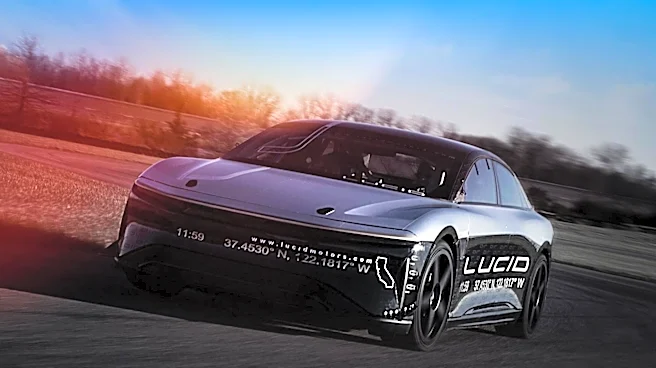
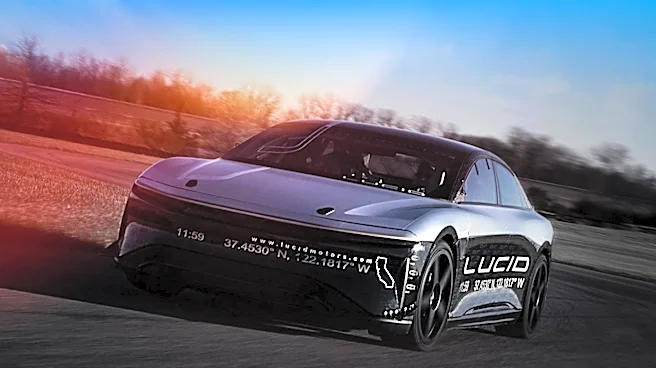
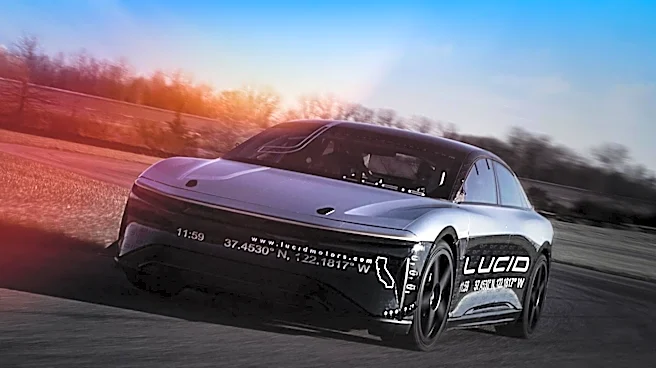
of CEO Silvio Napoli, Lucid is actively pursuing a turnaround strategy, which includes a $1.4 billion cash flow improvement plan for 2026. The company, through its Lucid Motors subsidiary, designs, engineers, and manufactures premium electric vehicles, such as the Lucid Air luxury electric sedan and the Lucid Gravity electric SUV. Lucid also develops electric powertrains, battery systems, software, and other technologies for its vehicles. Despite the broader positive movement in the electric vehicle (EV) sector, Lucid's momentum remains muted, reflecting ongoing challenges in its financial performance and market position.
Why It's Important?
Lucid Group's struggle to keep pace with its rivals, even during a positive market trend for the EV sector, highlights the significant financial and operational hurdles it faces. The substantial year-to-date stock decline and the ongoing need for a cash flow improvement plan underscore the company's precarious financial situation. While Lucid targets the luxury end of the market with its advanced vehicles, its heavy reliance on financing, particularly from Saudi Arabia's Public Investment Fund, indicates a need for sustained capital. The comparison with Rivian, which is seeing an upgrade based on its R2 SUV and potential for positive gross margins, emphasizes the market's focus on profitability and scalable production. For Lucid, achieving its turnaround goals and demonstrating a clear path to financial sustainability is critical to regain investor confidence and secure its long-term viability in the competitive EV landscape.
What's Next?
Lucid Group's immediate future will be heavily influenced by the execution of its $1.4 billion cash flow improvement plan for 2026. Investors will be closely monitoring the company's progress in reducing cash burn and improving its financial metrics. The market will also be looking for updates on production volumes, delivery numbers, and any strategic partnerships that could bolster its financial position. Unlike Rivian, which is banking on its R2 ramp to achieve positive automotive gross margins, Lucid needs to demonstrate a clear strategy for profitability across its premium vehicle lineup. The company's ability to manage its high capital expenditures while expanding its market presence will be a key determinant of its success. The broader EV market dynamics, including consumer demand for luxury EVs and the competitive actions of other manufacturers, will also play a significant role.
Beyond the Headlines
Lucid Group's situation reflects a broader narrative within the electric vehicle industry: the immense capital required to bring innovative technology to market and the challenge of achieving profitability in a rapidly evolving sector. While Lucid's vehicles are lauded for their technology and performance, the company's financial struggles highlight that technological prowess alone is not sufficient for long-term success. The need for a substantial cash flow improvement plan underscores the critical importance of operational efficiency, cost management, and a clear path to positive gross margins. This scenario also brings into focus the role of external financing, such as that from Saudi Arabia's Public Investment Fund, in sustaining capital-intensive ventures. The long-term implications for Lucid and similar EV startups will depend on their ability to transition from being technology innovators to financially robust and self-sustaining automotive manufacturers, a journey that often involves significant market consolidation and strategic realignments.