






What's Happening?
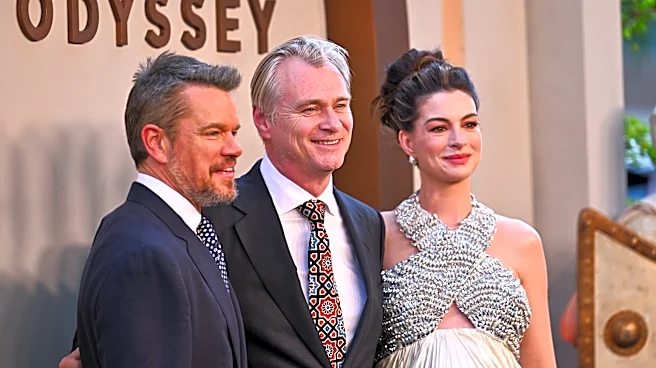
Christopher Nolan's latest film, 'The Odyssey,' offers a modern take on the ancient Greek epic by Homer. The film departs from the original narrative by minimizing the role of the Greek gods, focusing instead on human agency and moral clarity. Nolan's adaptation
replaces the pantheon of gods with a singular, distant deity, reflecting a more contemporary set of virtues. This shift allows the film to explore themes of personal responsibility and ethical behavior, diverging from the chaotic divine interventions that characterize the original text. The film's narrative centers on Odysseus's journey home, emphasizing his internal struggles and moral dilemmas rather than the whims of the gods.
Why It's Important?
Nolan's reinterpretation of 'The Odyssey' is significant as it reflects a broader cultural shift towards individualism and moral introspection. By sidelining the gods, the film aligns with modern sensibilities that prioritize human agency over divine intervention. This approach resonates with contemporary audiences who may find the idea of a capricious pantheon less relatable. The film's emphasis on ethical behavior and personal responsibility also mirrors current societal debates about morality and leadership. Nolan's adaptation could influence future interpretations of classical texts, encouraging filmmakers to explore timeless stories through a modern lens.