








What's Happening?
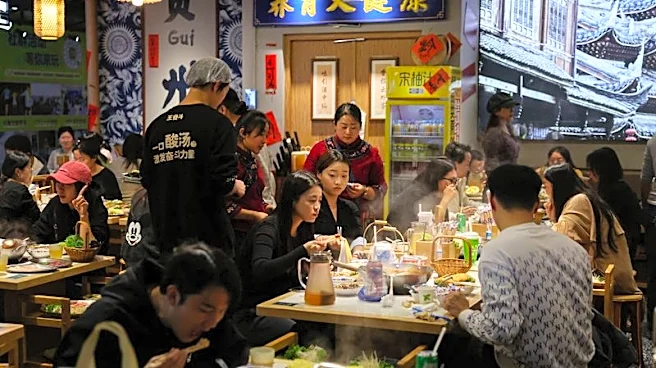
Foreign tourists are increasingly drawn to China's 'immersive dining' experiences, which are reshaping cultural tourism and consumer spending in cities like Shanghai and Chengdu. These venues seamlessly blend local flavors, rich historical heritage, and theatrical
performances to elevate traditional dining into a cultural journey. For example, 'TASTE OF CHINA' on Shanghai’s Bund offers multilingual services and weaves geographic and cultural stories of China into a seven-course meal, attracting a high proportion of overseas guests. Similarly, 'Gong Yan' (Palace Banquet) in cities like Beijing and Shanghai provides a highly ritualized imperial dining experience, where guests can wear Hanfu robes and witness cultural performances and historical narrations paired with each course. These experiences are designed to transform diners from passive observers into active participants in a living cultural narrative.
Why It's Important?
This trend signifies a significant shift in cultural tourism, moving beyond traditional sightseeing to offer deeper, more interactive engagements with Chinese culture. For foreign visitors, these immersive dining experiences provide a unique and accessible way to understand China's history and traditions, often overcoming language barriers through visual and performative elements. The willingness of international travelers to pay a premium for 'atmosphere and storytelling' highlights the value placed on authentic and memorable cultural encounters. This model not only boosts the tourism sector but also serves as a powerful tool for showcasing China's soft power, fostering cross-cultural understanding, and inspiring further exploration of the country's diverse regions and heritage. The success of these venues, such as Shu Yan Fu in Chengdu recouping its investment in just one year, demonstrates a viable and growing market for such innovative cultural offerings.
What's Next?
The immersive dining trend is expected to continue expanding across Chinese cities, with more venues likely to adopt similar models that integrate culinary arts with historical and cultural narratives. As demand from international tourists grows, these establishments may further refine their offerings, potentially incorporating more advanced technologies or diverse cultural themes. The success of these experiences could also inspire other sectors of the tourism industry to develop more interactive and culturally rich attractions. Furthermore, the positive reviews and word-of-mouth promotion from foreign visitors on platforms like Trip.com will likely continue to drive interest and attract new waves of tourists seeking these unique cultural journeys, solidifying China's position as a destination for experiential travel.
Beyond the Headlines
The rise of immersive dining experiences in China reflects a broader global shift in consumer preferences towards experiential consumption. In an increasingly digital world, there is a growing desire for tangible, sensory, and memorable experiences that offer a deeper connection to culture and history. These dining experiences tap into this desire by creating a multi-sensory environment that engages guests on emotional and intellectual levels. They also highlight the innovative ways in which cultural heritage can be preserved, presented, and monetized in the modern era. The emphasis on participation, such as wearing traditional attire and interacting with performers, transforms cultural consumption into a form of personal storytelling, making the experience more impactful and resonant for international travelers.