




What's Happening?
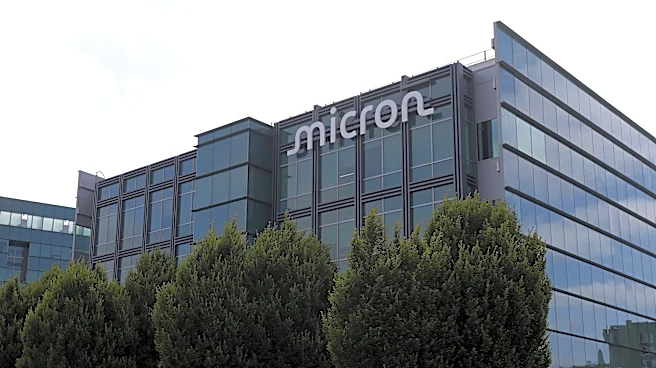
The Ministry of Economic Affairs (MOEA) in Taiwan has approved a significant investment of US$9.449 billion by U.S. memory chip supplier Micron Technology Inc. into its Taiwanese subsidiary. This approval is a major contributor to Taiwan's foreign direct
investment (FDI), which reached a record high of over US$20 billion for the January-to-October period, marking a 127.5 percent increase from the previous year. The overall FDI was spread across 1,878 applications. In addition to Micron's investment, Denmark-based offshore wind developer Orsted A/S received approval for a US$1.248 billion investment in Orsted Greater Changhua NW Holdings Ltd, and Netherlands-based MIT Hai Long Wind Power BV secured approval for US$1.054 billion for green energy development in Taiwan. Singapore was identified as the largest source of FDI to Taiwan, contributing 51.71 percent of the total.
Why It's Important?
This substantial investment by Micron Technology Inc. underscores the critical role Taiwan plays in the global semiconductor supply chain, particularly for U.S. technology companies. The influx of capital into Micron's Taiwanese operations is vital for maintaining and expanding memory chip production, which is essential for various U.S. industries, including artificial intelligence (AI), data centers, and consumer electronics. For the U.S., securing and strengthening its supply chain for critical components like memory chips through investments in key partners like Taiwan helps mitigate risks associated with geopolitical tensions and ensures a stable supply for its domestic technology sector. The investment also highlights the ongoing strategic economic ties between the U.S. and Taiwan, reinforcing Taiwan's position as a crucial hub for advanced manufacturing and technological innovation. This move benefits Micron by enhancing its production capabilities and market share, while Taiwan gains from increased foreign investment, job creation, and technological advancement.
What's Next?
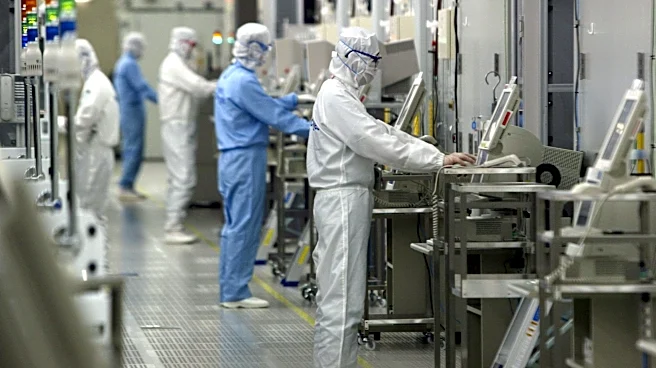
The approved investment is expected to bolster Micron's production capacity in Taiwan, potentially leading to increased output of memory chips crucial for the global technology market. This could further solidify Taiwan's position as a leading semiconductor manufacturing hub. The broader trend of increasing foreign direct investment in Taiwan, particularly in high-tech and green energy sectors, suggests continued economic growth and diversification for the island nation. For U.S. companies like Micron, these investments are part of a strategy to optimize global supply chains and respond to surging demand for advanced components. Future developments may include further expansion plans by Micron and other U.S. tech firms in Taiwan, driven by the ongoing demand for AI-related hardware and other advanced technologies.
Beyond the Headlines
The significant investment by Micron Technology Inc. in Taiwan reflects a broader strategic realignment in global supply chains, particularly in the semiconductor industry. As geopolitical tensions persist, especially concerning China, U.S. companies are increasingly looking to strengthen their manufacturing bases in allied or strategically important regions. This investment not only boosts Taiwan's economy but also serves as a testament to the island's critical role in global technology. It highlights the intricate balance between economic interdependence and national security interests, where investments in key technological sectors become a form of strategic partnership. The move could also encourage other U.S. tech giants to deepen their commitments in Taiwan, further integrating the two economies and potentially influencing future trade and foreign policy decisions.