






What's Happening?
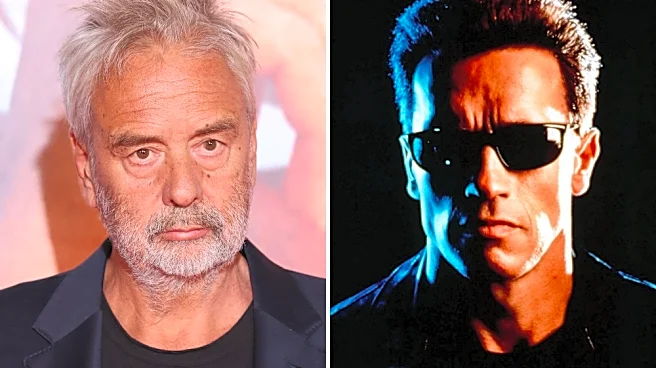
Filmmaker Luc Besson, speaking at the Torino Film Festival where he received the Stella delle Mole award, expressed strong criticism regarding the increasing financial control over the film industry. Besson argued that for the past two decades, moneyed
interests have dictated creative decisions, stifling artistic freedom. He emphasized that the creator, not the financier, should be the ultimate decision-maker in art, drawing a parallel to artists like Modigliani. Besson believes this financial dominance is 'killing art' by turning it into a commodity. He highlighted the importance of art, alongside water, air, and love, as essential for human life. Besson also discussed his preference for extraordinary stories and characters who are often marginalized by society, as well as his appreciation for actors who are 'good people' and committed to their craft, citing Caleb Landry Jones as a 'genius of the decade.'
Why It's Important?
Luc Besson's critique resonates deeply within the U.S. film industry, where concerns about corporate influence and franchise-driven content often overshadow original artistic vision. His comments highlight a tension between commercial viability and creative integrity, a perennial struggle that impacts the types of films produced and distributed in the U.S. The increasing consolidation of media companies and the emphasis on blockbuster franchises can limit opportunities for independent and artist-driven projects. This can lead to a homogenization of cinematic output, potentially reducing the diversity of stories and perspectives available to American audiences. Besson's call for artistic freedom underscores the importance of protecting creative autonomy to ensure the continued evolution and cultural relevance of cinema, rather than allowing it to be solely dictated by market trends and financial returns.
What's Next?
Besson's outspoken views could fuel ongoing debates within the U.S. film industry about funding models and creative control. There may be increased advocacy for independent filmmaking and alternative financing structures that prioritize artistic vision over purely commercial considerations. This could lead to a greater emphasis on film festivals and independent distributors as platforms for diverse cinematic voices. Additionally, Besson's preference for working with dedicated actors who are 'good people' might influence casting trends, encouraging a focus on talent and professionalism over celebrity status. His continued work on animated projects and collaborations with other directors suggests a path forward for maintaining creative integrity within the industry, potentially inspiring other filmmakers to seek similar avenues.
Beyond the Headlines
Besson's assertion that 'art' is as crucial as 'water, air, and love' delves into the fundamental role of creative expression in human society. His concern that financial control is 'killing art' suggests a broader societal issue where economic imperatives are increasingly encroaching upon and devaluing non-material aspects of life. This perspective challenges the prevailing capitalist ethos that often prioritizes profit above all else, including cultural enrichment and artistic innovation. The struggle for artistic freedom in filmmaking can be seen as a microcosm of a larger battle to preserve humanistic values in an increasingly commercialized world. His emphasis on 'extraordinary stories' and 'characters on the margins' also speaks to the power of cinema to explore complex social issues and provide alternative perspectives, which is vital for a healthy and reflective society.