
What's Happening?
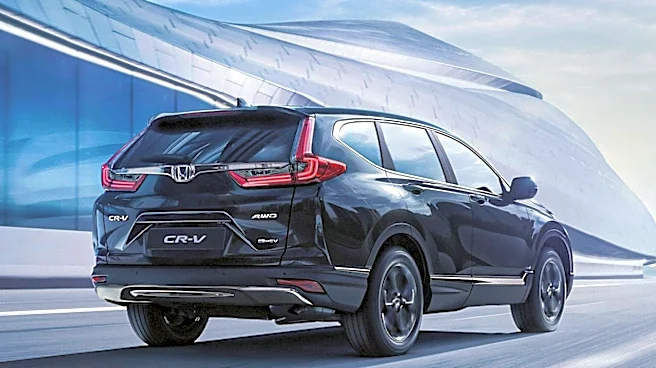
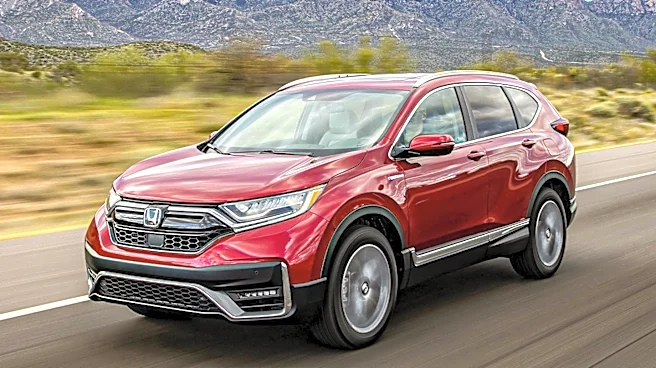
Honda North America has announced that the next-generation 2028 Honda CR-V will be exclusively powered by an all-new two-motor Honda Hybrid system, set to arrive next year. This marks a significant step
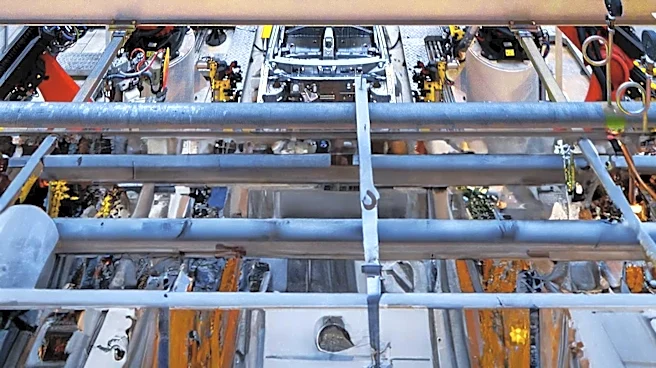
in Honda's strategy to increase hybrid-electric vehicle sales, with the CR-V being the first of several hybrid models planned for North America by 2030. The new CR-V will feature an enhanced Honda Hybrid system, improving performance and efficiency, and will debut an all-new platform designed for high body rigidity, light weight, and greater parts commonality. Production of the 7th-generation CR-V will continue across three North American plants, including the East Liberty Auto Plant in Ohio and the Indiana Auto Plant. To support this shift, Honda is investing in its U.S. manufacturing facilities, retooling the Honda Transmission Plant in Ohio (TMP-O) to produce next-generation hybrid systems, increasing capacity by 250 percent. The Anna Engine Plant is also being retooled to produce the new 4-cylinder Atkinson-cycle engine for the CR-V and future North American vehicles.
Why It's Important?
This strategic move by Honda North America underscores a broader industry trend towards electrification and hybrid technology, significantly impacting the U.S. automotive manufacturing sector. By committing to an all-hybrid CR-V and expanding hybrid system production in Ohio, Honda is reinforcing its manufacturing footprint in the U.S., potentially creating and securing jobs in these facilities. The increased production capacity for hybrid systems and engines indicates a long-term investment in American manufacturing capabilities for advanced automotive technologies. This shift also caters to growing consumer demand for more fuel-efficient vehicles, positioning Honda to capture a larger share of the hybrid market. The CR-V, being America's best-selling SUV, transitioning to an exclusive hybrid powertrain could accelerate the adoption of hybrid vehicles across the U.S., influencing other manufacturers to follow suit and contributing to national environmental goals.
What's Next?
The next-generation 2028 Honda CR-V is expected to arrive next year, with its exclusive hybrid powertrain. This launch will be supported by ongoing investments and retooling efforts at Honda's U.S. manufacturing plants in Ohio, specifically the Honda Transmission Plant and the Anna Engine Plant, to ramp up production of hybrid systems and engines. Honda plans to introduce several more hybrid models in North America by 2030, following the CR-V's lead. The company is also developing a new large-size hybrid system with a V6 engine for future large models made exclusively in the U.S., indicating further expansion of its hybrid offerings. These developments suggest a continued focus on hybrid technology as a core component of Honda's North American strategy, with potential for further investments and job creation in the U.S. automotive sector.
Beyond the Headlines
Honda's commitment to an all-hybrid CR-V and expanded U.S. hybrid production facilities reflects a deeper strategic alignment with evolving global environmental regulations and consumer preferences for sustainable transportation. This move could set a precedent for other major automakers in the U.S., accelerating the transition away from purely internal combustion engine vehicles. The investment in retooling existing plants rather than building entirely new ones highlights an adaptive approach to manufacturing, leveraging established infrastructure while upgrading it for future technologies. This also has implications for the supply chain, potentially boosting demand for components and materials related to hybrid vehicle production within North America. Furthermore, by making its best-selling SUV exclusively hybrid, Honda is not just responding to market trends but actively shaping them, potentially normalizing hybrid technology as a standard rather than a niche option for American consumers.