






What's Happening?
A recent report by Condé Nast Traveler, based on research from the vacation price comparison platform TravelSupermarket, identifies destinations with the lowest 'solo tax' for unaccompanied travelers. The study indicates that Thailand features four of
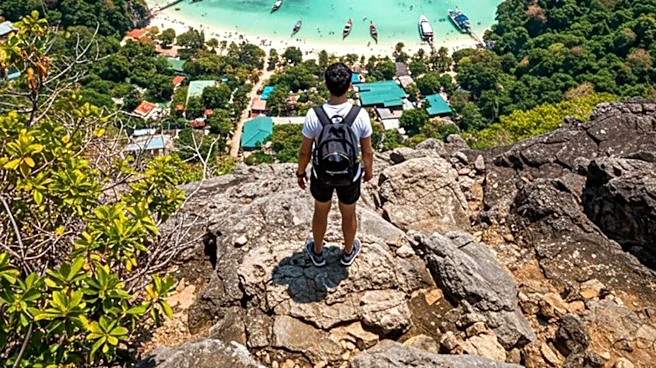
the top destinations with the most favorable rates for solo travelers. Khao Lak, a region on Thailand's west coast, ranked as the destination with the lowest solo tax, where a solo traveler would pay approximately 21% more than individuals traveling as a couple. For instance, a seven-night solo vacation in Khao Lak is estimated to cost around £1,400 ($1,847.76), compared to £1,155 ($1,524.40) per person for two travelers on the same holiday. Following Khao Lak, Phuket, Pattaya, and Bangkok also in Thailand, consecutively showed low singles taxes. In contrast, Barcelona, Spain, was noted as having the highest singles tax, with an 84% upcharge for solo travelers.
Why It's Important?
The concept of a 'singles tax' or 'single supplement' significantly impacts the travel industry and solo travelers' economic decisions. This additional charge, often applied when a solo traveler pays the full cost of accommodations designed for two or more people, or when excursion packages lack single-person options, can deter individuals from embarking on solo trips. The report highlights a critical economic barrier for a growing segment of the travel market. By identifying destinations like those in Thailand that minimize this 'tax,' the research provides valuable insights for solo travelers seeking more affordable options. This information can influence travel patterns, potentially shifting demand towards destinations perceived as more solo-traveler-friendly. For the travel industry, understanding and addressing the 'singles tax' can lead to more inclusive pricing strategies, fostering growth in the solo travel sector and enhancing customer satisfaction.
What's Next?
The findings of this report could prompt a reevaluation of pricing structures within the global travel industry. Destinations and travel providers that currently impose high 'singles taxes' might face increased pressure to adjust their policies to attract the burgeoning solo travel market. Travelers, armed with this information, are likely to prioritize destinations and tour operators that offer more equitable pricing for individuals. This could lead to a competitive shift, where more companies introduce single-occupancy rates or waive single supplements to cater to solo adventurers. Additionally, the report may encourage further research into the economic impact of solo travel and the development of specialized travel products and services tailored to this demographic, potentially leading to more transparent and fair pricing models across the industry.
Beyond the Headlines
The 'singles tax' reflects a broader societal and economic bias within the travel industry, where pricing models are often predicated on couples or groups. This practice not only imposes a financial burden on solo travelers but also subtly reinforces a social norm that prioritizes partnered or group experiences. The increasing visibility of this issue, as highlighted by reports like this, can spark conversations about fairness and inclusivity in travel. Beyond economics, the 'singles tax' can impact the psychological aspect of solo travel, making it feel less accessible or valued. Addressing this issue could empower more individuals to explore the world independently, fostering personal growth, cultural exchange, and a greater sense of freedom. It also challenges the industry to innovate beyond traditional models, recognizing the diverse needs and preferences of all travelers, regardless of their relationship status.