










What's Happening?
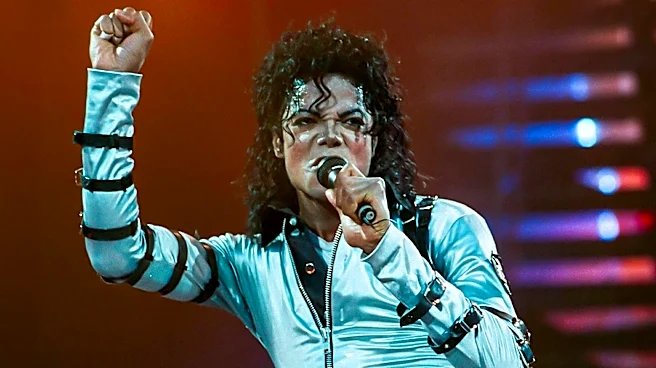
Madonna and Michael Jackson have both secured spots in the Billboard 200 Top 10 for the first time in 25 years. Madonna's latest album, 'Confessions II,' has debuted at No. 1 on the July 18 chart, while Michael Jackson's iconic 'Thriller' remains at No. 8.
This marks only the second time these two legendary artists have appeared together in the Top 10, the first being in 2001. During that time, Jackson's 'Invincible' was at No. 4 and Madonna's 'GHV2: Greatest Hits Volume 2' was at No. 7. Despite their significant influence on the music industry, their chart overlap has been rare due to the timing of their major releases.
Why It's Important?
The simultaneous appearance of Madonna and Michael Jackson in the Billboard 200 Top 10 underscores their enduring impact on the music industry. Madonna's 'Confessions II' has been praised for its blend of house, disco, and electronic music, marking her strongest debut since 2012. Meanwhile, Jackson's 'Thriller' continues to captivate audiences, demonstrating the lasting appeal of his music. This event highlights the continued relevance of these artists in shaping modern music trends and influencing new generations of listeners. Their presence in the Top 10 serves as a testament to their lasting legacies and the timeless nature of their contributions to pop music.
What's Next?
The resurgence of interest in both Madonna and Michael Jackson's music could lead to increased sales and streaming of their catalogs. For Madonna, the success of 'Confessions II' may prompt further projects or collaborations, potentially revitalizing her presence in the music scene. Jackson's enduring popularity, bolstered by recent biographical projects, suggests that his music will continue to find new audiences. The music industry may see a renewed focus on the styles and themes popularized by these artists, influencing upcoming releases and trends.
Beyond the Headlines
The achievement of Madonna and Michael Jackson in the Billboard 200 Top 10 also reflects broader cultural and historical shifts. Their music, which has shaped pop culture for decades, continues to resonate with audiences, highlighting the cyclical nature of musical trends. This event may inspire discussions about the evolution of pop music and the factors that contribute to an artist's lasting influence. Additionally, it raises questions about the role of nostalgia in music consumption and how legacy artists can maintain relevance in a rapidly changing industry.