







What's Happening?
The United States and Libya have signed a framework for strategic cooperation in the communications, information technology, and technology sectors. The agreement was formalized in Washington, D.C., by John Mills, the U.S. Deputy Assistant Secretary of
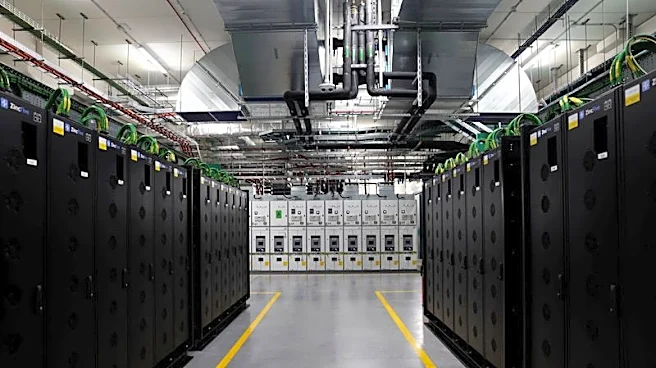
State for Cybersecurity and Digital Policy, and Abdel Baset Al-Baour, head of Libya’s Tripoli-based General Authority for Communications and Informatics. This framework aims to bolster Libya's role as a digital gateway connecting Europe and Africa. The cooperation encompasses various areas, including digital infrastructure, artificial intelligence, data centers, cybersecurity, satellite communications, investment, and technology transfer. This initiative aligns with Libya's National Communications and Informatics Strategy 2023-2027, which seeks to enhance the country's digital infrastructure and establish it as a regional technology hub. The agreement is seen as a significant step in strengthening Libyan-American relations and expanding economic opportunities for both nations.
Why It's Important?
This strategic cooperation framework is crucial for several reasons. For Libya, it represents a significant stride towards modernizing its digital infrastructure and diversifying its economy beyond oil. By positioning itself as a digital gateway between Europe and Africa, Libya can attract substantial technological investments and foster economic development, creating new opportunities for its citizens. For the United States, this agreement strengthens its strategic partnership with Libya, promoting secure and high-quality information and communication technology (ICT) systems in a geopolitically important region. It also aligns with broader U.S. foreign policy goals of supporting stability and economic growth in North Africa. The collaboration in cybersecurity and digital policy can help safeguard critical infrastructure and promote a secure digital environment, which is vital for global connectivity and trade. This partnership could also serve as a model for future U.S. engagements in the region, emphasizing technological cooperation as a tool for diplomacy and development.
What's Next?
Following the signing of this framework, the next steps will involve the implementation of specific projects and initiatives outlined in the agreement. This will likely include detailed planning and execution of efforts to develop digital infrastructure, establish data centers, and enhance cybersecurity capabilities in Libya. Both countries will need to form working groups to oversee these projects, facilitate technology transfer, and encourage investment. The success of this framework will depend on sustained commitment from both the U.S. and Libyan governments, as well as engagement from private sector stakeholders. Regular reviews and assessments will be necessary to ensure the objectives are met and to adapt to evolving technological landscapes. This cooperation could also pave the way for further bilateral agreements in other sectors, deepening the strategic relationship between the two nations.
Beyond the Headlines
The strategic cooperation in technology between the U.S. and Libya extends beyond immediate economic and security benefits. It signifies a broader effort to integrate Libya into the global digital economy, potentially fostering greater stability and reducing reliance on traditional resource-based industries. By developing a robust digital infrastructure, Libya can enhance its connectivity, improve governance through e-services, and create a more resilient economy. This initiative also carries geopolitical implications, as it positions the U.S. as a key partner in Libya's technological advancement, potentially counterbalancing the influence of other global powers in the region. Furthermore, the focus on secure ICT systems underscores the growing importance of digital sovereignty and cybersecurity in international relations, highlighting how technological partnerships are becoming integral to national security and economic prosperity in the 21st century.