


What's Happening?
The Indiana Pacers are actively seeking to upgrade their roster depth through the trade market, according to reports from Jake Fischer. The team is looking for 'mid-tier' improvements, particularly after injuries to key players like Ben Sheppard, who
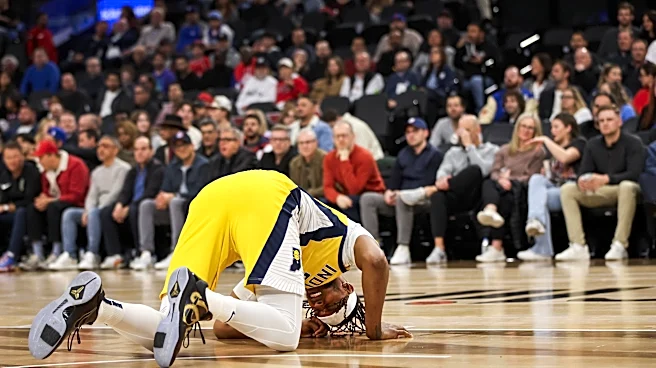
suffered a meniscus tear, and Johnny Furphy, who is recovering from an ACL injury. These injuries have left two roster spots filled by unavailable players. The Pacers entered the season with 14 players due to limited space under the First Apron. Acquiring a player with 0-1 years of NBA experience, such as Nique Clifford who was recently traded to the Oklahoma City Thunder, could have filled their 15th roster spot and provided a young asset on a team-friendly deal. The team is approximately $2.2 million below the First Apron, allowing them to take on slightly more salary in trades, but with restrictions. Expiring contracts of players like Walker, Sheppard, and Nance, along with team-friendly deals for Huff, Jackson, and Furphy, are considered potential trade assets. The emergence of Jalen Slawson in the rotation has led to speculation that Jarace Walker could be on the trading block.
Why It's Important?
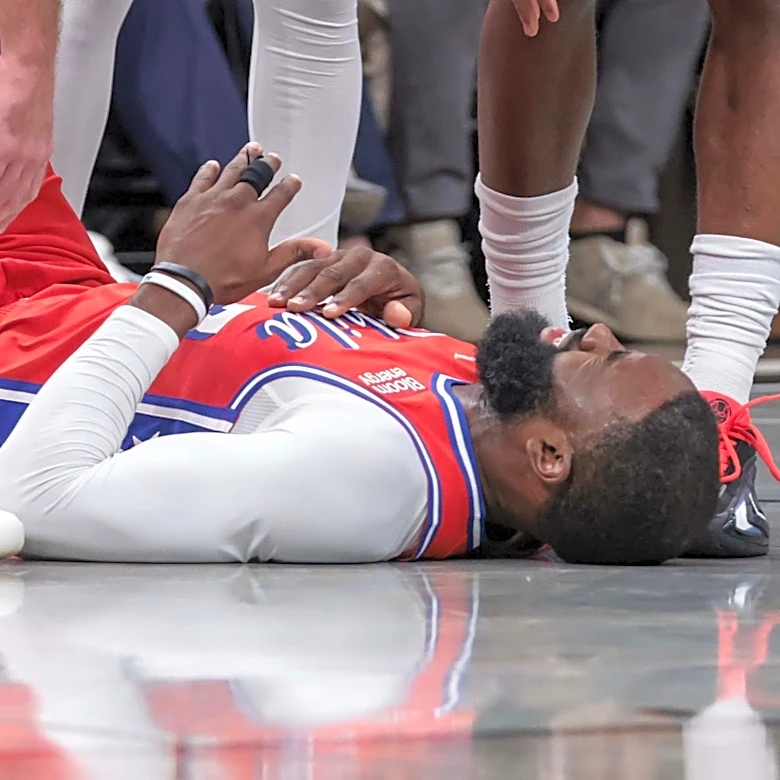
This strategic move by the Pacers highlights the critical role of roster depth and financial management in professional sports. Injuries to key players can significantly derail a team's season, as evidenced by the Pacers' struggles without star guard Tyrese Haliburton, who has been out due to a hamstring injury. The team's current 5-9 record and No. 21 ranking in NBA Power Rankings underscore the immediate need for reinforcements. By leveraging expiring contracts and team-friendly deals, the Pacers aim to acquire talent without incurring substantial long-term financial commitments, which is crucial as several key players will soon be seeking new contracts. The ability to operate below the First Apron provides a slight financial advantage in trade negotiations, allowing them to absorb more salary than they send out. This approach is vital for maintaining competitiveness while navigating the complex salary cap rules of the NBA, ensuring the team can address immediate needs and plan for future financial sustainability.
What's Next?
The Pacers' front office is expected to continue exploring trade opportunities as the NBA trade deadline approaches. The December 15th date is significant as it marks when recently signed free agents become eligible to be traded, potentially expanding the pool of available players. The team's focus will likely remain on acquiring 'mid-tier' players who can provide immediate depth and contribute to a more consistent performance, especially in the absence of injured starters. The decision regarding Jalen Slawson's two-way contract status will also be a factor; while he is currently a cost-effective asset, converting him to a standard contract would impact the team's salary cap. The return of Tyrese Haliburton from injury is anticipated to provide a significant boost, but the team's proactive stance in the trade market indicates a commitment to strengthening the roster regardless of individual player returns. The Pacers aim to avoid falling further into a difficult position in the standings, which could make a playoff push challenging.
Beyond the Headlines
The Pacers' situation reflects a broader trend in professional sports where player health and salary cap management are increasingly intertwined with team success. The reliance on two-way contracts and the strategic timing of conversions demonstrate the intricate financial planning required to build and maintain a competitive roster. The impact of injuries on team performance also highlights the importance of robust player development programs and scouting for versatile talent. The speculation surrounding Jarace Walker's trade availability, despite being a recent draft pick, underscores the high-stakes nature of NBA roster construction and the constant evaluation of player value. This proactive approach to trades, even for 'mid-tier' players, can significantly influence team chemistry and long-term strategic direction, emphasizing that success in the NBA is not solely about star power but also about the depth and adaptability of the entire squad.