


What's Happening?
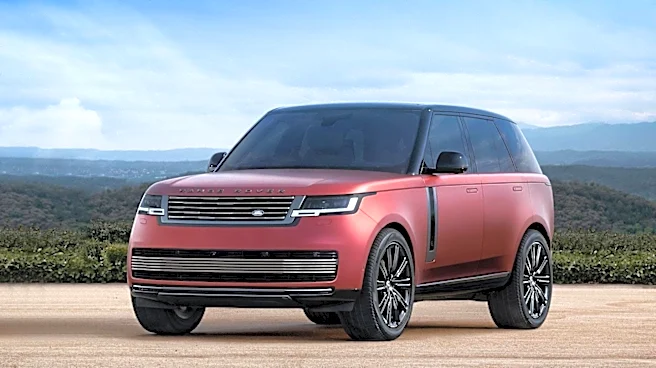
Range Rover has unveiled its first all-electric model, the 2027 Range Rover Electric, which boasts 542 horsepower, 627 lb-ft of torque, and an estimated 330 miles of range on the US EPA cycle. The vehicle utilizes an 800-volt architecture and a 118.5-kWh
battery, capable of fast charging from 10 to 80 percent in 22 minutes. Built on the same MNA platform as its internal combustion counterparts, the Electric model maintains the brand's signature luxury and off-road prowess, including the ability to tow up to 5,500 pounds. Ryan Miller, Range Rover's head of global marketing, noted that the company had planned for an all-electric model over a decade ago, integrating the design into its existing platform to avoid higher costs later. The vehicle's battery is bolted under the floor, increasing torsional rigidity by 60 percent and lowering the center of gravity by over three inches, contributing to a total curb weight of 6,050 pounds.
Why It's Important?
The introduction of the 2027 Range Rover Electric marks a significant step for the luxury SUV market, demonstrating that high-end brands are committed to electrification despite fluctuating market demand for EVs in some regions. By retaining its core attributes of luxury and off-road capability, Range Rover aims to appeal to its traditional customer base while embracing sustainable technology. The use of an 800-volt architecture and a large battery pack positions the vehicle competitively against other premium electric SUVs, offering substantial power and range. This move also highlights the strategic foresight of manufacturers who 'package-protected' for electric powertrains years in advance, underscoring the long-term planning required in the automotive industry. The vehicle's design, which integrates the battery to enhance structural integrity and lower the center of gravity, showcases innovative engineering solutions to EV challenges.
What's Next?
The 2027 Range Rover Electric is expected to reach dealerships in the first quarter of 2027, with a starting price of $140,450. Range Rover will continue to monitor market demand globally, adjusting production of its electric, hybrid, and internal combustion models on the shared MNA platform. The company's commitment to electrification suggests further development in EV technology and potentially more electric models across its lineup. The success of the Range Rover Electric could influence other luxury automakers to accelerate their own EV development, particularly in maintaining brand-specific performance and luxury standards. Future updates may include more details on customization options through Range Rover's 'Bespoke' division, allowing for further personalization at higher price points.
Beyond the Headlines
The launch of the Range Rover Electric reflects a broader trend in the automotive industry where luxury brands are navigating the transition to electric power without compromising their established identity. This vehicle challenges the perception that EVs must sacrifice performance or luxury for sustainability. The high price point and focus on premium features suggest that the initial wave of luxury EVs will cater to a niche market, but their technological advancements often trickle down to more accessible segments. The emphasis on off-road capability in an EV also pushes the boundaries of what electric vehicles are perceived to be capable of, potentially opening new market segments and challenging existing stereotypes about EV utility. The long-term impact will be seen in how well these luxury EVs integrate into diverse global markets with varying EV adoption rates and infrastructure readiness.