





What's Happening?
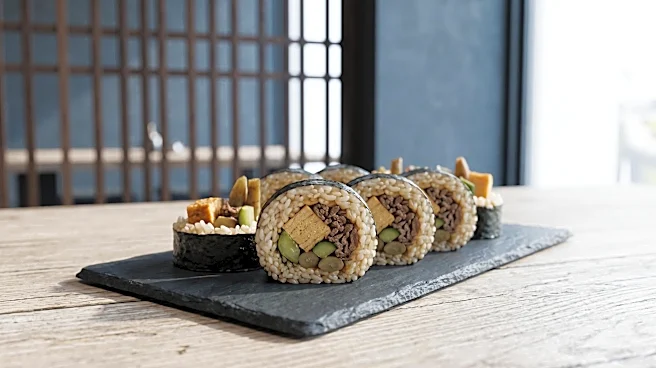
Tabletop sushi robots are now being utilized to create 'Obanzai Rolls,' a modern interpretation of traditional Kyoto-style home cooking. This innovation brings the centuries-old Japanese principle of Mottainai, which emphasizes valuing and fully utilizing
ingredients to minimize waste, into the 21st century. Japanese food designer and cultural strategist Sayaka Wada demonstrated this technology, explaining that Obanzai dishes historically used cooked, pickled, and non-perishable ingredients due to the lack of refrigeration. The sushi robots efficiently flatten cooked rice to form the base of the rolls, which are then filled with ingredients like seasoned tofu, deep-fried tofu, burdock root, tamagoyaki (egg), eel, pickled cucumbers, and simmered beef. These ingredients not only align with the zero-waste premise but also contribute to a deeper, more savory flavor profile compared to typical raw fish sushi. The technology allows for rapid production, with a robot forming a rice base in seconds and another quickly rolling the ingredients.
Why It's Important?
This technological advancement in food preparation holds significance for the U.S. food industry by showcasing how automation can be integrated with traditional culinary practices to promote sustainability. The adoption of zero-waste principles, like Mottainai, through robotics can lead to increased efficiency in food production and reduced food waste, which is a growing concern in the U.S. The use of cooked, pickled, and non-perishable ingredients in Obanzai Rolls could also inspire new menu developments in American restaurants, offering more sustainable and flavorful options. Furthermore, the efficiency of sushi robots in preparing these rolls could lead to cost savings for businesses, making sustainable practices more economically viable. This approach could also appeal to a growing consumer base in the U.S. that prioritizes environmentally conscious food choices and unique culinary experiences.
What's Next?
The integration of sushi robots and zero-waste principles in food preparation could expand beyond specialized Japanese cuisine. Other segments of the U.S. food service industry might explore similar robotic solutions to enhance efficiency, reduce waste, and incorporate sustainable practices into their operations. Further research and development in food robotics could lead to more versatile machines capable of preparing a wider range of dishes while adhering to zero-waste guidelines. Consumer demand for sustainable and ethically produced food items is likely to continue growing, potentially driving more restaurants and food manufacturers to adopt such technologies and philosophies. Educational initiatives could also emerge to train culinary professionals in utilizing these advanced tools and understanding the underlying principles of zero-waste cooking.
Beyond the Headlines
Beyond the immediate culinary applications, this development highlights a broader trend of technology intersecting with cultural traditions to address modern challenges like sustainability. The concept of Mottainai, deeply embedded in Japanese culture, offers a philosophical framework for resource management that could be more widely adopted in the U.S. The use of robots in food preparation also raises questions about the future of culinary arts, balancing efficiency and tradition. It could lead to a re-evaluation of what constitutes 'authentic' cuisine in an era of automation. Furthermore, the focus on non-perishable and cooked ingredients in Obanzai Rolls could influence dietary trends, promoting healthier and more sustainable eating habits by reducing reliance on raw ingredients and minimizing spoilage. This blend of ancient wisdom and cutting-edge technology could foster a more mindful approach to food consumption and production.