






What's Happening?
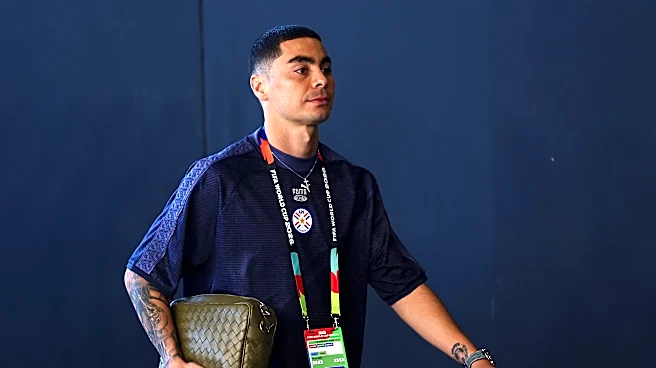
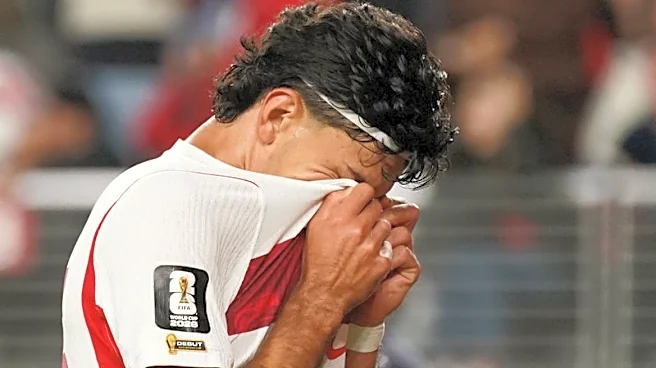
Paraguay midfielder Miguel Almiron became the first player to receive a red card at the World Cup for covering his mouth during a verbal exchange with Turkey's Mert Mulder. The incident occurred during first-half stoppage time in a Group D match. Referee
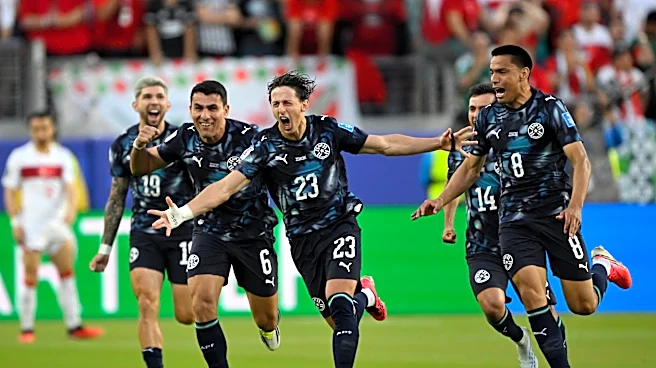
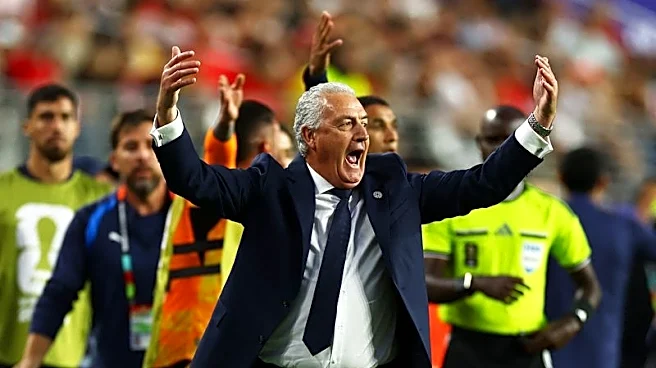
Ivan Barton, after a video review, issued the red card under a new rule implemented for this year's World Cup. Paraguay was leading 1-0 at the time and managed to maintain their lead despite being a player down for the second half. The rule was introduced following an incident in a Champions League game where a player attempted to conceal verbal insults. Paraguay's coach, Gustavo Alfaro, expressed concern that the rule might be too strict, potentially affecting the essence of football.
Why It's Important?
The red card issued to Almiron highlights the impact of new regulations aimed at promoting sportsmanship and transparency in football. This rule change reflects FIFA's efforts to address unsportsmanlike conduct, potentially setting a precedent for future tournaments. The decision could influence how players communicate on the field, emphasizing the importance of visible and accountable interactions. For Paraguay, Almiron's absence in the next match against Australia could affect their performance, as they compete for a spot in the knockout stages. The incident underscores the ongoing evolution of football rules and their implications for player behavior and team dynamics.
What's Next?
Almiron will miss Paraguay's final group stage match against Australia, with the possibility of an extended suspension if FIFA decides to take further action. This could impact Paraguay's strategy and lineup as they aim to secure a place in the knockout rounds. The enforcement of this new rule may lead to increased scrutiny of player conduct in future matches, prompting teams to adjust their communication strategies. FIFA's decision to implement such a rule may also spark discussions among football governing bodies about the balance between maintaining the sport's integrity and preserving its traditional elements.