





What's Happening?
Rwandan President Paul Kagame has confirmed Rwanda's interest in acquiring an equity stake in the planned Dangote refinery in Lamu, Kenya. Speaking in Kigali, President Kagame stated that while contacts are real, discussions are still in their early stages,
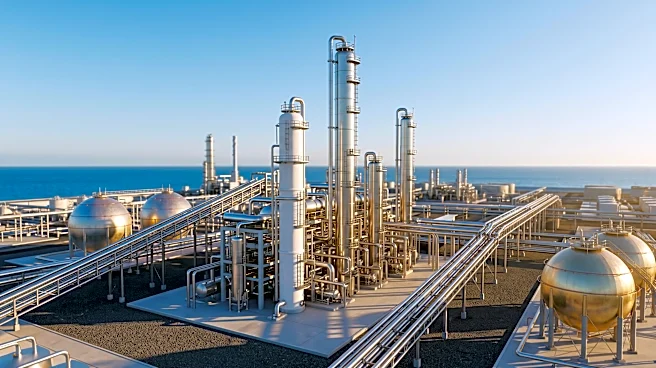
and no firm commitment has been made. Bloomberg previously reported that Kenya, Ethiopia, and Rwanda were offered a combined 30% stake in the project, citing Kenyan presidential adviser David Ndii. Kenya's own 10% share is estimated to cost around US$500 million, with the full regional package potentially totaling US$1.5 billion. The refinery, designed to process 700,000 barrels of crude oil per day, is projected to cost approximately US$16 billion for the refinery itself, and up to US$20 billion including petrochemical plants and port works. Construction is anticipated to begin by October and take less than four years to complete.
Why It's Important?
Rwanda's interest in the Dangote refinery is significant, particularly given its landlocked status and lack of domestic oil production. An equity stake would provide Rwanda with crucial supply security for refined fuels, reducing its vulnerability to global market fluctuations and logistical challenges associated with importing through distant ports. East Africa currently refines very little of its own fuel, making countries in the region highly dependent on imported petrol and diesel at prices set internationally. A stake in the Lamu refinery would give Rwanda a voice in the plant's output allocation, ensuring a more stable and potentially cost-effective supply of energy. This move could bolster Rwanda's economic stability, support industrial growth, and enhance regional energy independence. It also highlights a broader trend of African nations seeking to invest in critical infrastructure to secure essential resources and foster economic resilience.
What's Next?
The discussions regarding Rwanda's potential equity stake in the Dangote refinery are ongoing and are described as 'work in progress.' Further negotiations will be required to determine the exact stake size, financial commitments, and a definitive timeline for Rwanda's involvement. The project's overall progress will also depend on regulatory approvals and the finalization of financing structures, including securing lenders and crude supply plans. The absence of public comments from the Dangote Group or the Ethiopian government on President Kagame's remarks suggests that formal agreements are yet to be reached. The development of this refinery, along with a rival project in Tanzania, indicates a growing regional focus on energy self-sufficiency, which could lead to increased competition or collaboration in the East African energy market.
Beyond the Headlines
Rwanda's pursuit of a stake in the Dangote refinery transcends immediate energy security concerns, reflecting a strategic vision for long-term economic development and regional influence. By investing in a major regional energy asset, Rwanda aims to solidify its position within East Africa's economic landscape, potentially fostering deeper integration and cooperation with neighboring countries. This move could also serve as a model for other landlocked nations seeking to mitigate their geographical disadvantages through strategic investments in regional infrastructure. The broader context of two rival refinery projects in East Africa (Lamu and Tanga) highlights the complex interplay of economic ambition, national interests, and regional politics. While competition could drive efficiency, it also underscores the need for coordinated regional energy policies to avoid overcapacity or fragmented markets, ultimately impacting the cost and availability of fuel across the continent.