







What's Happening?
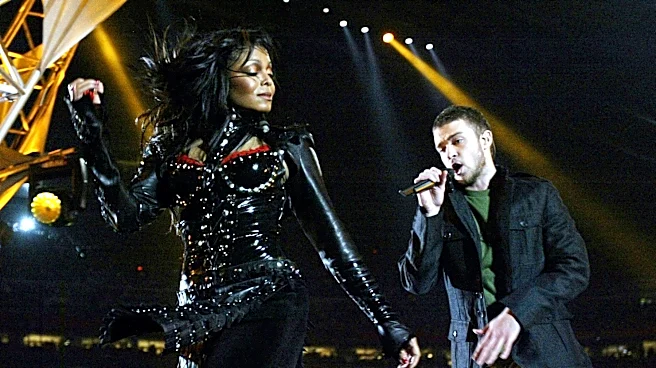
Wayne Scot Lukas, Janet Jackson's former fashion designer, claims the infamous 2004 Super Bowl halftime show 'wardrobe malfunction' was a deliberate act, not an accident. Lukas states he designed the outfit specifically for Justin Timberlake to expose
Jackson's breast, an idea he attributes to Jackson's choreographer, Gill. He asserts that the 'malfunction' was intended to be a quick reveal, followed by Jackson covering herself and a cut to black by MTV producers. However, according to Lukas, MTV producers failed to cut away, leaving Jackson exposed. This revelation comes ahead of an Apple TV documentary series where Jackson and Timberlake are expected to discuss the incident. Lukas, who was not asked to participate in the documentary, expressed shock and stated that Timberlake's coining of the term 'wardrobe malfunction' unfairly blamed him.
Why It's Important?
This new claim by Wayne Scot Lukas could significantly alter the public's understanding of a pivotal moment in pop culture and broadcasting history. The 2004 Super Bowl incident led to widespread controversy, an FCC investigation, and a crackdown on broadcast indecency, profoundly impacting live television standards in the U.S. If Lukas's allegations are true, it shifts responsibility from an accidental 'malfunction' to a planned stunt, potentially implicating more individuals and organizations in the initial event. This re-evaluation could influence how media companies approach live performances and the level of scrutiny applied to creative decisions, especially in high-profile events like the Super Bowl. It also raises questions about accountability and the narrative control surrounding such incidents, potentially affecting the legacies of those involved.
What's Next?
Janet Jackson and Justin Timberlake are slated to discuss the 2004 Super Bowl incident in an upcoming Apple TV documentary series in December. This documentary will likely provide their perspectives on the event, which could either corroborate or contradict Lukas's claims. The public and media will be closely watching for their statements, especially concerning the alleged pre-planning of the 'wardrobe malfunction' and the role of MTV producers. Depending on the documentary's content, there could be renewed discussions about broadcast regulations, artistic freedom, and the responsibilities of performers and production teams during live events. The revelations might also prompt further scrutiny of past media narratives and how such incidents are reported and remembered.
Beyond the Headlines
The ongoing debate surrounding the 2004 Super Bowl incident highlights deeper issues concerning media control, public perception, and the long-term consequences of controversial live events. Lukas's claim that the event was planned, coupled with his assertion that MTV producers failed to execute the intended cutaway, underscores the complex interplay between artistic intent, production execution, and regulatory oversight. The incident's aftermath, including Jackson's blacklisting by MTV and CBS and the FCC investigation, demonstrates the significant power of public outcry and regulatory bodies in shaping media content. This situation also touches upon the ethical responsibilities of designers and choreographers in live performances and how narratives surrounding such events can be manipulated or reinterpreted years later, impacting careers and public memory.