
What's Happening?
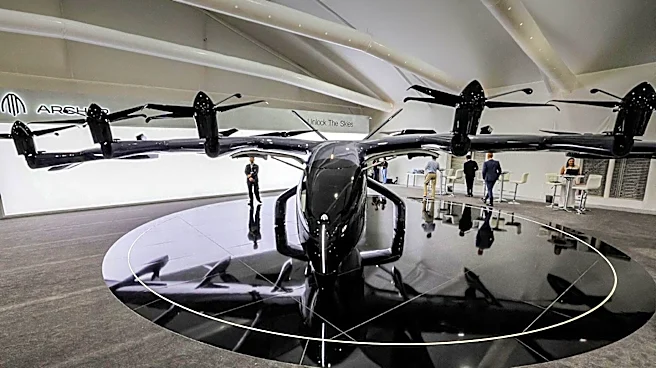
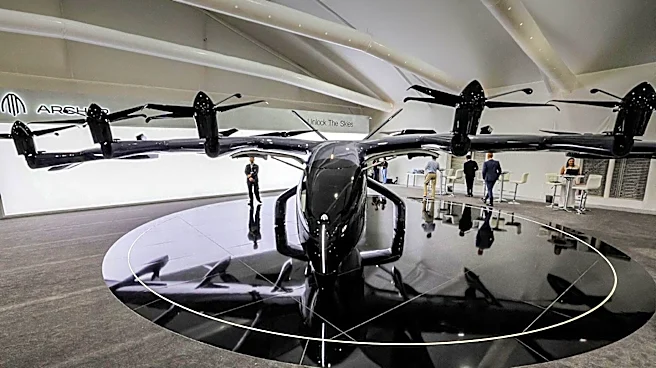
Archer Aviation's stock has seen a substantial decline, losing 61.3% of its value in the year leading up to November 24, 2026, falling from $7.44 to $2.88. This contrasts sharply with the S&P 500's 8.6%
return over the same period. The company's highest stock close in the past year was $9.01 on January 22, 2026, while its lowest was $2.88 on November 24, 2026. Despite the stock's performance, Archer Aviation reported its first revenue of $5.1 million in the three months ending September 30, 2026, exceeding analysts' forecasts. This revenue was primarily driven by engine deliveries to Anduril for Omen. However, the company's operating losses have grown, reaching $1,057 million for the four quarters ending September 30, 2026, compared to $619 million a year prior. Free cash flow also remained negative at minus $751 million over the same period.
Why It's Important?
The significant drop in Archer Aviation's stock price, alongside similar declines in peer companies like Joby Aviation and Eve, indicates a broader market skepticism or re-evaluation within the air taxi sector. While the company has achieved its first revenue, the substantial and growing operating losses and negative free cash flow highlight the immense capital requirements and long development cycles inherent in the eVTOL industry. Investors are facing a prolonged period without income as the company focuses on achieving full aircraft certification by 2028. This situation underscores the high-risk, high-reward nature of investing in nascent, capital-intensive technologies, where profitability is a distant prospect and regulatory approval is a critical hurdle. The performance of Archer Aviation and its peers could influence future investment trends and public perception of the urban air mobility market.
What's Next?
Archer Aviation's immediate focus remains on achieving full certification for its aircraft by 2028, a critical step for commercial operations. The company will need to demonstrate continued progress in its development and regulatory processes to regain investor confidence. While revenue generation has begun, the challenge will be to scale these sales significantly to offset the substantial operating losses and negative free cash flow. The market will closely watch for further revenue growth, cost management strategies, and any updates on the certification timeline. The performance of the broader air taxi group will also be a key indicator, as collective progress or setbacks could impact Archer Aviation's trajectory and the overall viability of urban air mobility as a commercial enterprise.
Beyond the Headlines
The financial struggles of Archer Aviation, despite its technological advancements and initial revenue, highlight the inherent challenges in bringing revolutionary transportation technologies to market. The long lead times for regulatory approval, coupled with massive research and development costs, create a demanding environment for startups in this sector. This situation raises questions about the sustainability of venture capital models for such capital-intensive industries and the role of government support in fostering innovation. The success or failure of companies like Archer Aviation will not only determine the future of urban air mobility but also provide valuable lessons for other emerging technologies that require significant upfront investment and navigate complex regulatory landscapes.