







What's Happening?
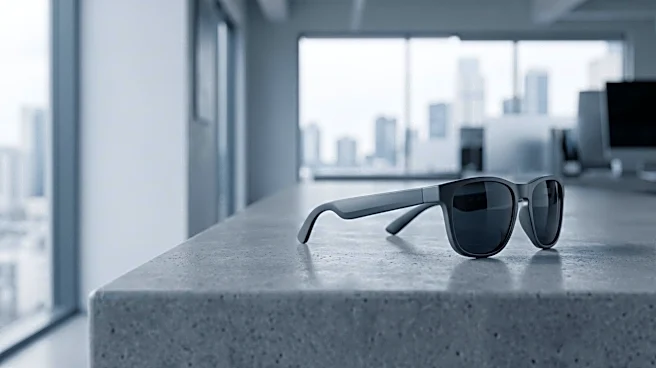
Meta Platforms is confronting a proposed nationwide class action lawsuit, alleging the company utilized photographs from Facebook and Instagram to extract biometric information. This data was reportedly used to train an unreleased facial recognition system,
internally known as NameTag, intended for its smart glasses. The lawsuit, filed in the U.S. District Court for the Northern District of Illinois, claims Meta also trained generative AI models, including Emu and Muse Image, using these images without obtaining user consent. Plaintiffs, including Illinois resident Francisco Alvarez and California resident Jeremy Wahl, assert violations of the Illinois Biometric Information Privacy Act (BIPA), California publicity and misappropriation law, and the California Constitution’s privacy protections. The complaint details that Meta allegedly created biometric identifiers, such as face embeddings or templates, from these photos to identify individuals encountered by smart glasses wearers. Meta has previously stated that while it explored facial recognition, no such feature has been released to consumers, and it is not building a central face database.
Why It's Important?
This lawsuit carries significant implications for the tech industry and user privacy, particularly concerning the collection and use of biometric data. The case challenges the extent to which tech companies can leverage user-generated content for developing advanced AI and facial recognition technologies without explicit consent. If successful, it could set a precedent for how biometric information is defined and protected under privacy laws, especially in the context of generative AI models. The outcome could influence the design and deployment of future smart devices and AI systems, potentially requiring more stringent consent mechanisms and transparency from companies handling sensitive personal data. For consumers, it highlights the ongoing debate about data ownership and the potential for personal images shared on social media to be used in ways not initially anticipated or consented to, impacting trust in digital platforms.
What's Next?
The proposed class action lawsuit will proceed in the U.S. District Court for the Northern District of Illinois. Meta has not yet filed a substantive response to the new lawsuit. The plaintiffs are seeking an injunction, damages, and an order requiring Meta to cease the alleged practices. For the BIPA claims, plaintiffs are seeking statutory damages of $5,000 for intentional or reckless violations and $1,000 for negligent violations, or actual damages, whichever is greater. The court will need to determine whether the mathematical representations learned and retained by generative AI models constitute a 'scan of face geometry' or biometric information under BIPA. The proposed national class would include anyone in the U.S. whose image was uploaded to Facebook, Instagram, or to one of Meta’s generative AI models in response to a prompt, with separate classes for Illinois and California residents. The class period begins on September 4, 2021, and none of the classes have been certified yet.
Beyond the Headlines
This case delves into the complex ethical and legal questions surrounding the intersection of biometric data, artificial intelligence, and user privacy. It pushes the boundaries of existing privacy laws, particularly BIPA, to address how identity-specific characteristics encoded within generative AI models should be treated. The lawsuit suggests that even if a facial recognition system isn't actively deployed, the mere act of training AI with biometric data without consent could be a violation. This could lead to a re-evaluation of what constitutes 'biometric information' in the age of advanced AI, potentially expanding its definition to include latent representations or model parameters. The outcome could also influence the development of future regulations governing AI training data, emphasizing the need for clear consent and robust data governance frameworks to protect individuals' digital identities from unauthorized use by powerful tech entities.