




What's Happening?
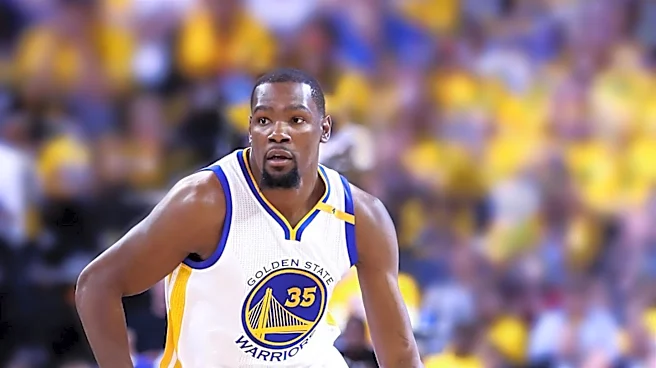
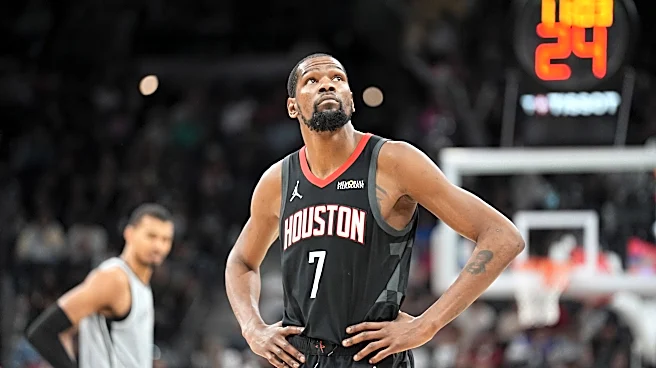
NBA star Kevin Durant has unequivocally stated that the Golden State Warriors would not have secured their two championships in 2017 and 2018, nor established their dynasty, without his presence. This assertion comes as former Cleveland Cavaliers guard
Iman Shumpert reignited the debate surrounding Durant's 2016 decision to join the Warriors. Shumpert, who was part of the Cavaliers team that lost to the Warriors in the Finals, claimed Durant's move prevented him from winning two additional rings. Durant's comments, which resurfaced recently, directly counter the long-standing criticism that he merely 'rode the bus' of an already dominant team. He emphasized his role in the team's success, particularly highlighting his two Finals MVP awards during those championship runs and his consistent scoring leadership, including averaging 35.2 points in the 2017 series.
Why It's Important?
This renewed debate is significant for several reasons within the NBA and sports culture. It challenges the narrative surrounding team success versus individual contribution, particularly in an era where 'super teams' are common. Durant's insistence on his indispensable role in the Warriors' dynasty underscores the complex dynamics of player legacy and public perception. For the NBA, it highlights the ongoing discussion about competitive balance and the impact of star player movements on league parity. The controversy also affects how fans and analysts evaluate historical achievements, prompting a re-examination of the Warriors' dominance during that period. The exchange between Durant and Shumpert, and the subsequent fan engagement, demonstrates the enduring passion and differing perspectives on what constitutes a 'fair' or 'earned' championship in professional sports.
What's Next?
The debate surrounding Kevin Durant's legacy with the Golden State Warriors is likely to continue, fueled by fan discussions and media analysis. While Durant has made his stance clear, the differing opinions from former players like Iman Shumpert ensure that this topic will remain a point of contention. Future analyses of NBA history and team dynasties will undoubtedly revisit this period, weighing the contributions of all key players. For Durant, his current career trajectory and future team affiliations will continue to be scrutinized through the lens of his past decisions and his pursuit of further championships. The ongoing dialogue will also influence how current and future NBA stars consider their team choices and the potential impact on their own legacies.
Beyond the Headlines
Beyond the immediate sports headlines, this discussion touches upon broader themes of individual agency versus collective achievement and the often-harsh scrutiny faced by high-profile athletes. Durant's decision to join an already formidable Warriors team, while strategically sound for winning championships, drew significant criticism regarding the 'spirit' of competition. This reflects a societal tension between celebrating individual ambition and upholding ideals of fair play and competitive struggle. The debate also highlights the power of narrative in shaping public perception of athletes, where a player's 'story' can be as impactful as their on-court performance. The long-term implications include how future generations of athletes might navigate similar career choices, balancing personal success with public opinion and the desire to be seen as a legitimate champion.