



What's Happening?
The World Bank Enterprise Surveys, drawing on 292,581 firm interviews across 186 economies from 2005-2025, highlight that unreliable electricity is a significant and costly constraint for businesses in the developing world. The surveys indicate that 52%
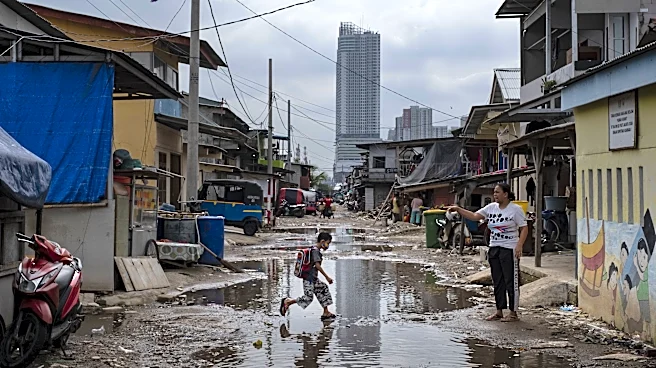
of firms globally experienced power outages in the last fiscal year, with 47% identifying electricity as an obstacle to their operations. This issue is particularly concentrated in Sub-Saharan Africa, where 75% of firms report outages, averaging nearly 8 per month, and incurring costs equivalent to 5.2% of annual sales. In contrast, high-income OECD economies experience outages in 27% of firms, with an average of 0.3 outages per month, costing only 0.2% of sales. The Middle East and North Africa, along with South Asia, also face high frequencies of outages, ranging from 13 to 16 per month. The report also notes that access to finance plays a role, as firms with bank loans are more likely to own generators, suggesting that credit constraints exacerbate the impact of infrastructure failures.
Why It's Important?
The findings from the World Bank Enterprise Surveys underscore a critical impediment to economic development and business stability in numerous regions. The substantial financial burden imposed by power outages, particularly in Sub-Saharan Africa, directly impacts the profitability and operational efficiency of businesses, hindering their growth and ability to contribute to local economies. This unreliability discourages investment, limits productivity, and can lead to job losses, perpetuating cycles of underdevelopment. The disparity between developing and high-income economies in terms of outage frequency and cost highlights a significant infrastructure gap that affects global economic equity. Furthermore, the link between access to finance and the ability to mitigate outage impacts through generator ownership reveals how existing financial inequalities can compound the challenges faced by businesses in vulnerable regions, making it harder for them to adapt and thrive.
What's Next?
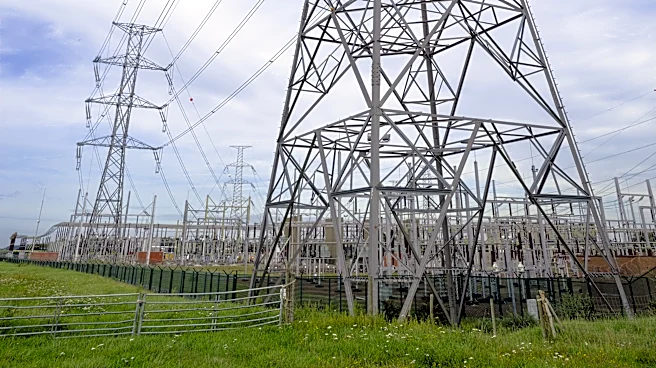
The World Bank's data provides a clear impetus for policymakers and international development organizations to prioritize investments in electricity infrastructure in developing economies. Addressing the high incidence and cost of power outages will likely involve a multi-faceted approach, including upgrading existing grids, investing in renewable energy sources, and improving grid management. Additionally, policies aimed at enhancing access to finance for businesses in these regions could enable more firms to invest in backup power solutions, thereby mitigating the immediate impacts of unreliable electricity. Future efforts may also focus on regional collaborations to share best practices and resources for energy development. The ongoing monitoring through the Enterprise Surveys will continue to provide crucial data to track progress and identify areas requiring further intervention, guiding strategic investments and policy reforms to foster more resilient and stable business environments.
Beyond the Headlines
The pervasive issue of unreliable electricity extends beyond immediate economic costs, touching upon broader societal and ethical dimensions. Frequent power outages can disrupt essential services such as healthcare and education, impacting public well-being and human development. For instance, hospitals may struggle to maintain critical equipment, and schools may face interruptions in learning. Environmentally, the reliance on generators, often powered by fossil fuels, contributes to increased carbon emissions and air pollution, creating a paradox where efforts to sustain business operations inadvertently exacerbate climate change. This situation also highlights issues of energy justice, as communities with fewer resources disproportionately bear the brunt of inadequate infrastructure. Addressing this challenge requires not only technical solutions but also a commitment to equitable development, ensuring that all populations have access to reliable and sustainable energy, which is fundamental for achieving broader socio-economic goals and improving quality of life.