





What's Happening?
The Federal Energy Regulatory Commission (FERC) has approved MARA Holdings' acquisition of the Long Ridge natural gas plant in Ohio. This approval marks a significant step in the Bitcoin miner's expansion into power generation, a deal valued at approximately
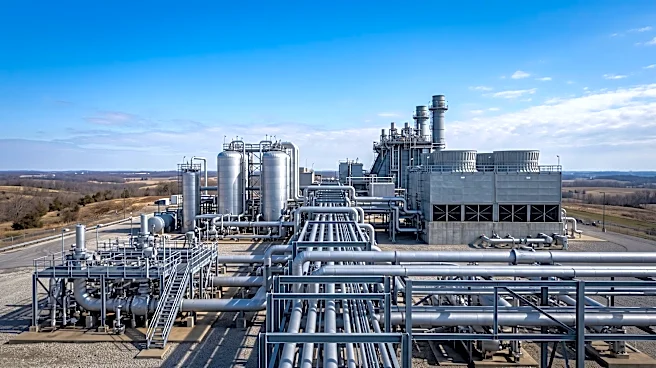
$1.5 billion. Under the terms of the acquisition, MARA will retain about $900 million in Long Ridge debt and pay approximately $610 million in cash. The company plans to utilize a roughly $600 million Bitcoin-backed loan, secured in August, to cover the cash portion of the transaction. The Long Ridge plant possesses a nameplate capacity of 505 megawatts, with 485 megawatts of output already approved. FERC also decided against mandating that the plant continue selling electricity into the PJM grid as a condition for approval. The closing deadline for this deal is November 30.
Why It's Important?
This acquisition is highly significant for the U.S. energy and cryptocurrency sectors. For MARA Holdings, it represents a strategic move to integrate power generation directly into its Bitcoin mining operations, potentially reducing energy costs and increasing operational stability. By owning its power source, MARA can mitigate the volatility of energy prices, which is a major operational expense for cryptocurrency miners. This trend of vertical integration in the crypto mining industry could lead to greater energy independence for large-scale miners and potentially influence the broader energy market. The FERC's decision not to require the plant to continue selling electricity into the PJM grid provides MARA with greater flexibility in how it utilizes the plant's output, likely prioritizing its own mining needs. This could set a precedent for future acquisitions by cryptocurrency companies in the energy sector, impacting energy distribution and pricing in regions with significant mining operations.
What's Next?
With FERC approval secured, MARA Holdings is set to finalize the acquisition of the Long Ridge natural gas plant by the November 30 deadline. The company will proceed with integrating the power plant into its operations, aiming to leverage it for its Bitcoin mining activities. This move is expected to enhance MARA's energy self-sufficiency and potentially improve its profitability by controlling a key input cost. The success of this integrated model could encourage other cryptocurrency mining firms to pursue similar strategies, leading to further consolidation and vertical integration within the industry. Additionally, regulators and energy market operators will likely monitor the impact of such acquisitions on regional power grids and energy markets, potentially leading to new policies or regulations concerning energy usage by large-scale data centers and cryptocurrency operations.
Beyond the Headlines
The acquisition of a natural gas plant by a Bitcoin mining company like MARA Holdings highlights the evolving relationship between the energy sector and emerging digital industries. This development raises questions about energy consumption, environmental impact, and the future of energy infrastructure in the context of growing demand from high-energy-intensive operations like cryptocurrency mining. While MARA's move aims to secure a stable and potentially cheaper energy supply, it also underscores the significant energy footprint of Bitcoin mining. The long-term implications could include increased investment in renewable energy sources by mining companies to address sustainability concerns, or a push for more efficient mining technologies. This convergence of traditional energy assets with digital currency operations represents a novel economic model that could reshape how energy is produced, consumed, and valued in the digital age.