


What's Happening?
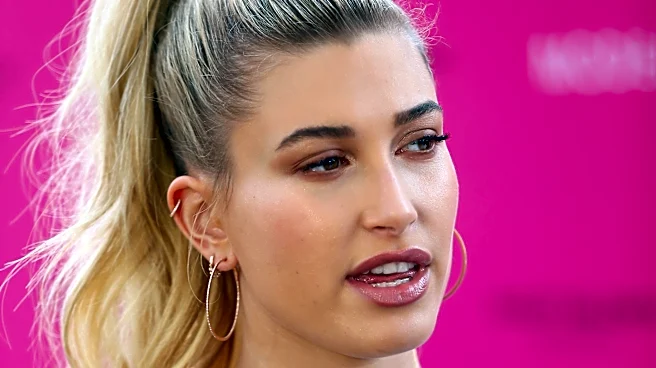
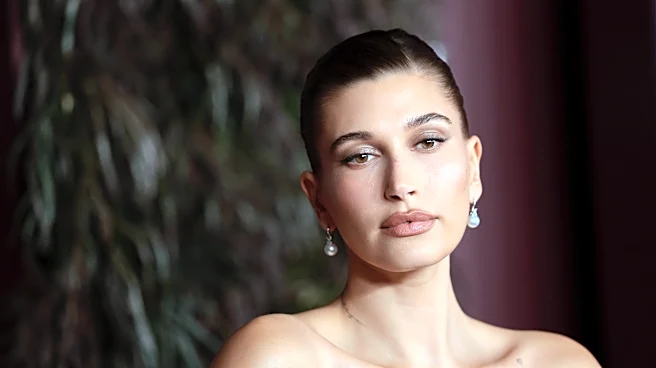
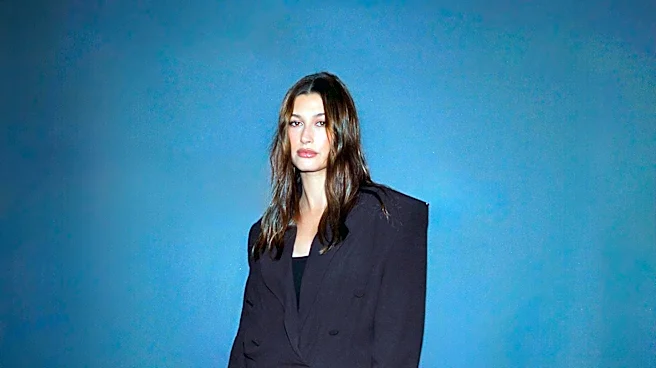
Hailey Bieber, founder of the skincare brand Rhode, has faced online criticism following her interview with journalist Andrew Ross Sorkin at the 2026 DealBook Summit in New York on November 18. The interview focused on the development of Rhode, its sale
to e.l.f. Beauty for $1 billion, and Bieber's experience with public attention. A viral social media discussion emerged, with many viewers suggesting Bieber appeared unprepared for serious business questions, with one prominent comment stating, 'She thought this was a podcast.' During the interview, Sorkin questioned Bieber about her initial valuation of Rhode, to which she responded that $1 billion was her minimum price, attributing her ambition to 'optimistical delusion.' This exchange became a central point of the online debate.
Why It's Important?
This event highlights the increasing scrutiny faced by celebrity entrepreneurs in the business world, particularly when discussing high-value transactions. The public reaction underscores a perceived disconnect between celebrity status and business acumen, raising questions about the credibility and preparedness of public figures in serious financial discussions. For e.l.f. Beauty, the acquiring company, the controversy surrounding its new strategic adviser, Hailey Bieber, could influence public perception of the acquisition and its future brand messaging. The incident also sparks a broader conversation about how business interviews with celebrities are conducted and received, and whether fame should exempt individuals from rigorous questioning about their ventures.
What's Next?
The ongoing online discussion is likely to continue shaping public perception of Hailey Bieber as a business leader and could influence future media appearances and brand engagements. For e.l.f. Beauty, the company may need to consider how this public reaction impacts its strategic advisory role for Bieber and its overall marketing efforts for the Rhode brand. The incident could also lead to increased caution among other celebrity entrepreneurs when engaging in high-profile business interviews, potentially prompting more thorough preparation for such events to avoid similar criticisms. The debate also sets a precedent for how journalists might approach interviews with celebrity business owners in the future.
Beyond the Headlines
The criticism directed at Hailey Bieber extends beyond a simple interview, touching upon deeper societal perceptions of wealth, privilege, and merit in the business world. The 'optimistical delusion' comment, while intended to convey ambition, was interpreted by some as a lack of concrete business strategy, fueling skepticism about the valuation of celebrity-backed ventures. This incident also reflects a cultural tension between the curated image of celebrity and the demanding realities of corporate finance. It raises questions about the role of social media in shaping public opinion and the immediate, often unforgiving, nature of online commentary on public figures' professional endeavors, potentially influencing how celebrity endorsements and acquisitions are viewed in the long term.