





What's Happening?
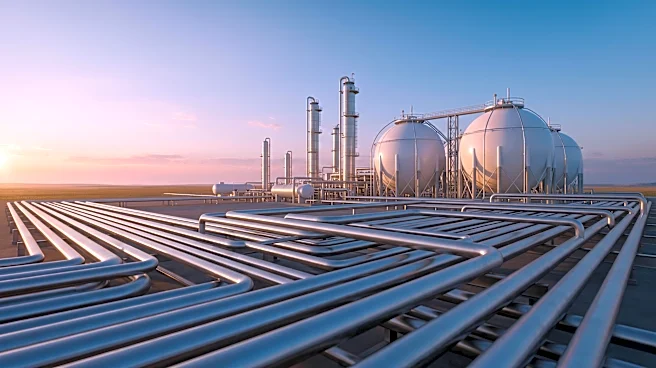
Topsoe has entered into an agreement with First Ammonia to provide its dynamic ammonia synthesis technology for a new green ammonia production facility in Victoria, Texas. This project aims to produce green ammonia by utilizing green hydrogen, which will
be generated through electrolysis powered by renewable electricity. The deal, reported by Hydrogen Central, signifies a significant step towards the commercial-scale production of green ammonia in the United States. The facility is designed to cater to both international and domestic U.S. markets. The financial closing for the project is anticipated in late 2026, with commercial operations expected to commence in 2029. Joel H. Moser, First Ammonia's chief executive, expressed confidence in Topsoe's leadership in ammonia synthesis technology, while Yassir Ghiyati, Topsoe's chief commercial officer, emphasized the growing importance of operational flexibility in green ammonia projects.
Why It's Important?
This agreement is a pivotal development for the U.S. energy sector and its transition towards sustainable practices. The establishment of a large-scale green ammonia plant in Texas underscores the growing commitment to decarbonization within industrial processes. Green ammonia, produced using renewable energy, has the potential to serve as a clean fuel for shipping, power generation, and as a sustainable fertilizer, significantly reducing carbon emissions across multiple industries. The project's dual focus on international and domestic markets highlights the U.S.'s ambition to become a leader in the global green hydrogen and ammonia economy. The dynamic ammonia synthesis technology from Topsoe, which allows for rapid adjustments in production based on power generation fluctuations, is crucial for integrating intermittent renewable energy sources into industrial processes, thereby enhancing the reliability and efficiency of green ammonia production.
What's Next?
The immediate next step for the First Ammonia project in Texas is to achieve financial close, which is expected by late 2026. Following this, the construction and development phases will commence, leading up to the anticipated start of commercial operations in 2029. The successful implementation of this project could serve as a blueprint for future green ammonia initiatives in the U.S. and globally. Stakeholders, including environmental groups, energy companies, and policymakers, will be closely monitoring its progress and impact. The project's success could also spur further investment in renewable energy infrastructure and electrolysis technologies, creating new jobs and fostering economic growth in the green energy sector. Additionally, the development of a robust green ammonia supply chain could accelerate the decarbonization efforts in hard-to-abate sectors like heavy industry and long-haul transportation.
Beyond the Headlines
The Texas green ammonia project represents more than just an industrial development; it signifies a broader shift in how the U.S. approaches energy production and industrial sustainability. The reliance on renewable electricity for hydrogen production, which then feeds into ammonia synthesis, exemplifies a circular economy approach that minimizes environmental impact. This initiative could also have significant geopolitical implications, as it reduces reliance on fossil fuels and enhances energy independence. Furthermore, the project highlights the critical role of technological innovation, such as Topsoe's dynamic synthesis process, in enabling the transition to a green economy. The ethical considerations surrounding the responsible sourcing of renewable energy and the long-term environmental stewardship of such large-scale industrial operations will also be paramount as the project progresses and potentially inspires similar ventures.