
What's Happening?
A California appeals court has ruled that a lawsuit accusing HBO Max series 'The Pitt' of being an unauthorized reboot of 'ER' can proceed against Warner Bros. Television. The lawsuit was filed by Sherri
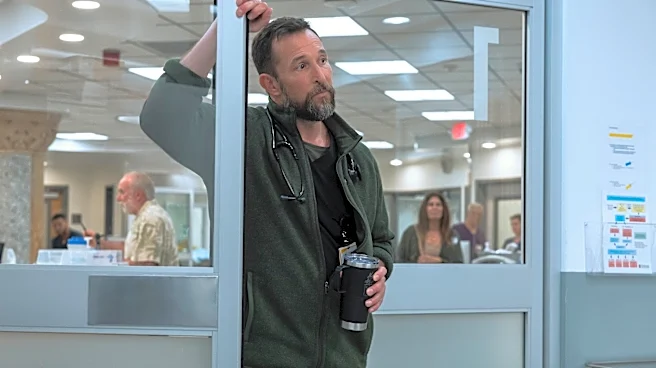
Crichton, widow of 'ER' creator Michael Crichton, who alleges that 'The Pitt' was developed without her permission after she declined to approve a proposed 'ER' reboot. The court noted similarities between the two medical dramas, including their emergency room settings, fast-paced storytelling, medical terminology, and the challenges faced by hospital workers. Despite the lawsuit moving forward against the studio, actor Noah Wyle, who stars in 'The Pitt' and previously in 'ER,' along with producers John Wells and R. Scott Gemmill, have been dismissed as defendants. The judges found insufficient evidence that these individuals were aware of the specific contract terms they were accused of interfering with. Warner Bros. Television maintains that 'The Pitt' is an original series and denies the allegations.
Why It's Important?
This lawsuit highlights significant intellectual property rights issues within the entertainment industry, particularly concerning the creation of new content that bears resemblance to established franchises. The outcome could set a precedent for how studios approach developing new series that might be perceived as reboots or continuations of existing works, especially when original creators or their estates hold specific contractual rights. For Warner Bros. Television, a loss could result in substantial financial penalties and potential restrictions on future content development. Conversely, if the studio prevails, it could reinforce the industry's ability to create new shows inspired by popular genres without facing claims of unauthorized reboots. The case also underscores the complexities of contractual agreements made with creators and their estates, emphasizing the need for clear terms regarding sequels, remakes, and spinoffs.
What's Next?
'The Pitt' is currently preparing for its third season, which is expected to premiere in January 2027, indicating that production and development are continuing despite the ongoing legal challenge. Warner Bros. Television has stated its intention to vigorously defend its position as the case proceeds, suggesting a potentially lengthy legal battle. The appeals court's ruling only allows the lawsuit to move forward; it does not determine whether 'The Pitt' is, in fact, an unauthorized reboot of 'ER.' The next steps will likely involve further legal proceedings, including discovery and potentially a trial, where both parties will present evidence regarding the originality of 'The Pitt' and the contractual obligations related to 'ER.' The entertainment industry will closely watch the developments, as the final judgment could influence future production strategies and intellectual property negotiations.
Beyond the Headlines
The legal dispute between Sherri Crichton and Warner Bros. Television delves into the broader ethical considerations of creative legacy and ownership in Hollywood. Michael Crichton's original agreement with Warner Bros. included provisions preventing the studio from creating sequels, remakes, or spinoffs of 'ER' without his or his estate's permission. This case tests the enforceability and interpretation of such clauses in an era where studios frequently seek to leverage established intellectual property. Beyond the legal specifics, it raises questions about the balance between artistic inspiration and copyright protection, and how much creative freedom new productions have when they operate within a genre popularized by a previous hit. The outcome could influence how estates manage the rights to deceased creators' works and how studios navigate the fine line between homage and infringement, potentially leading to more stringent contract clauses or more cautious development processes for projects that echo past successes.