


What's Happening?
A newly built 3,500-square-foot home in Los Altos Hills, California, designed by Jaimie Belew of Maison Jaimie Belew Interior Design, successfully blends European and California farmhouse styles. The design emphasizes creating a sense of history and collected
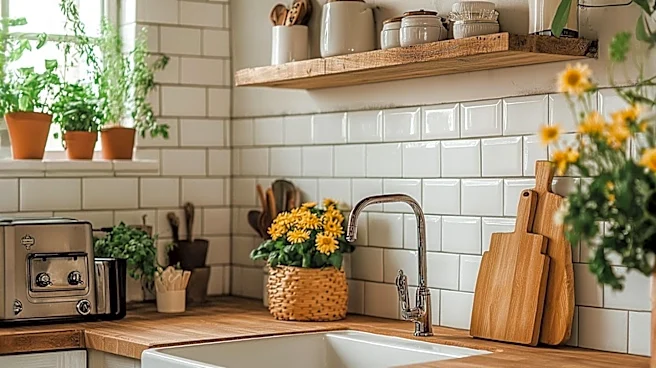
character within a modern structure. Key features include a rustic kitchen with wire-brushed oak cabinetry by Reclaimed West, stone flooring, and brass fixtures, aiming for a crafted yet unpolished feel. The home incorporates light neutral color palettes, vintage furniture, and decor to evoke the warmth and authenticity of old European country homes. Architectural elements like arched doorways and reclaimed wood flooring from Exquisite Surfaces contribute to the historical ambiance. The project took three years, focusing on material palettes, custom furnishings, and antique sourcing to achieve its unique character.
Why It's Important?
This California home exemplifies a significant trend in U.S. interior design and architecture: the desire for new constructions to possess the charm and character typically associated with older, lived-in homes. For the U.S. real estate and design industries, this project demonstrates that there is a strong market for homes that prioritize unique aesthetics and a sense of history over purely contemporary minimalism. It highlights the value placed on craftsmanship, natural materials, and curated interiors, which can influence design choices and material sourcing for future residential developments. The blend of European and California styles also showcases a growing appreciation for diverse cultural influences in American home design, potentially broadening the scope of design trends and material suppliers.
What's Next?
The success of this design approach in California could lead to increased demand for similar blended styles across the U.S., particularly in regions where new constructions often lack historical depth. Designers and builders may increasingly focus on incorporating elements like reclaimed materials, vintage furnishings, and custom architectural details to imbue new homes with character. This trend could also spur innovation in manufacturing, with companies developing new products that mimic the look and feel of aged or handcrafted items. Furthermore, the emphasis on thoughtful curation and long-term design could encourage consumers to invest in higher-quality, more durable pieces, moving away from fast-furniture trends.
Beyond the Headlines
Beyond its aesthetic appeal, this home's design reflects a deeper cultural yearning for authenticity and connection to the past in an increasingly modern world. The deliberate effort to create a 'lived-in' feel in a new build speaks to a desire for comfort, permanence, and a personal narrative within one's living space. This approach challenges the notion that new homes must always look starkly contemporary, suggesting that a blend of old and new can create a more soulful and enduring environment. It also highlights the role of interior design as a form of storytelling, where each element contributes to a rich and layered personal history, even in a brand-new residence.