






What's Happening?
Michael B. Jordan has acknowledged receiving an award at the 2026 Dadasaheb Phalke International Film Festival (DPIFF) Awards for his 2025 horror film 'Sinners.' The actor shared a post from the festival's official Instagram account on his Instagram Stories,
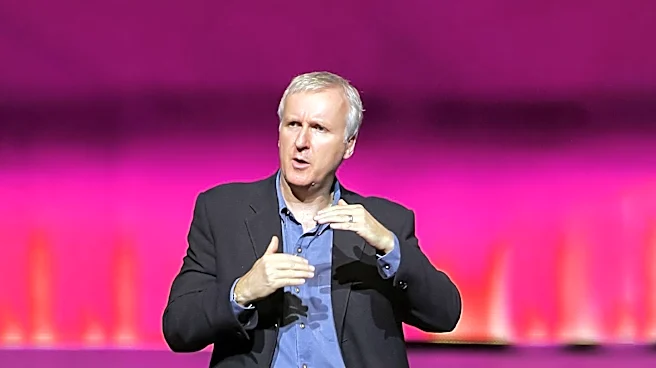
adding a simple 'thank you' to recognize the honor. Jordan was among several international celebrities, including Taylor Swift and filmmaker James Cameron, who were listed as winners by the festival this year. This acknowledgment from Jordan provides an answer to social media speculation regarding whether these international figures were aware of their wins in India. However, a crucial distinction exists: the DPIFF Awards are a privately organized film festival and are not affiliated with the Indian government. They are separate from the Dadasaheb Phalke Award, which is India's highest national honor in cinema, conferred by the Government of India for outstanding contributions to Indian cinema.
Why It's Important?
Michael B. Jordan's acknowledgment of the DPIFF Award highlights the growing global reach and influence of various film festivals, even those without official government backing. While the DPIFF is a private entity, its ability to attract and recognize international talent like Jordan, Swift, and Cameron demonstrates its ambition to gain prominence in the global film landscape. The confusion surrounding the DPIFF Awards and the official Dadasaheb Phalke Award underscores the importance of clear branding and communication for film festivals, especially when their names closely resemble established national honors. For actors like Jordan, receiving such an award, regardless of its official status, can contribute to their international profile and potentially open doors to new markets and collaborations. It also reflects the increasing interconnectedness of the entertainment industry worldwide, where recognition from diverse platforms can hold value.
What's Next?
While Michael B. Jordan has acknowledged his DPIFF award, it remains unclear whether he was aware of the distinction between the privately organized DPIFF Awards and India's highest national film honor, the Dadasaheb Phalke Award. This situation may prompt further discussion within the film industry about the proliferation of awards and their varying levels of prestige and official recognition. For the DPIFF, Jordan's acknowledgment could lend it more credibility and visibility on the international stage, potentially attracting more high-profile participants in future editions. Conversely, the distinction might lead to increased scrutiny regarding how such festivals position themselves and their awards. Future acknowledgments from other international winners like Taylor Swift or James Cameron could further shape public perception of the DPIFF.
Beyond the Headlines
The incident with Michael B. Jordan and the DPIFF Awards touches upon broader themes of cultural exchange and the commodification of recognition in the global entertainment industry. The similarity in names between the DPIFF Awards and the official Dadasaheb Phalke Award raises questions about intellectual property and the potential for brand confusion, especially in an international context. This situation could lead to discussions about the need for clearer differentiation among various awards to maintain the integrity and prestige of established national honors. Furthermore, it highlights how social media platforms have become central to how celebrities engage with and acknowledge such accolades, often bypassing traditional media channels. The episode also subtly points to the aspirational nature of many privately organized festivals seeking to elevate their status by associating with globally recognized figures, even if the recognition is not from the highest official body.