





What's Happening?
Bernie Baumohl, chief global economist at The Economic Outlook Group, presented an optimistic economic outlook at The Lodging Conference 2026 in Phoenix, despite rising interest rates, inflation, and geopolitical uncertainties. Baumohl, recognized as
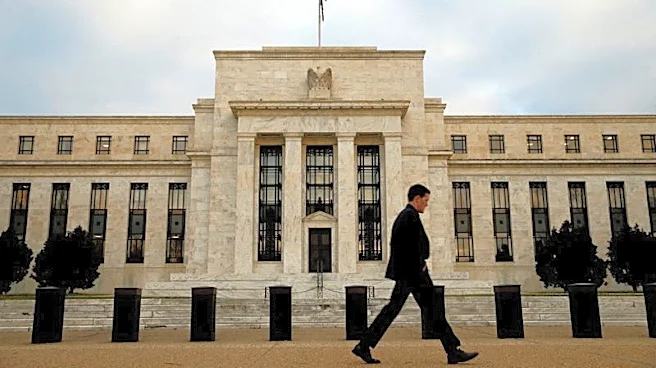
a top economic forecaster by The Wall Street Journal in 2025, projects U.S. GDP growth of 2.6% in 2026, moderating to 2.1% in 2027 and 2.0% in 2028. This forecast indicates a slow-growth environment rather than a recession. A significant driver of this growth is expected to be investment in Artificial Intelligence (AI), which Baumohl anticipates will contribute 41.6% of growth in 2026, increasing to 48% in 2027. Government spending is also expected to remain elevated, while consumer spending is projected to cool, falling from 27.8% of GDP to approximately 20% by 2027. The Federal Reserve raised rates by 25 basis points on September 16, and Baumohl expects two more increases: another 25 basis points late in 2026 and 50 basis points in 2027.
Why It's Important?
This economic forecast is crucial for U.S. industries, particularly the lodging sector, as it outlines a path of continued, albeit slower, growth. The emphasis on AI investment as a dominant contributor to GDP signals a significant shift in economic drivers, potentially leading to increased demand for business travel related to AI and tech clusters. However, the projected cooling of consumer spending and rising interest rates pose risks, especially for lower-income households, which could impact discretionary spending on leisure travel. The anticipated increases in the 10-year Treasury yield, potentially exceeding 5% in 2027 and 2028, driven by AI-related capital demand, war-related spending, rising deficits, and reduced foreign appetite for U.S. Treasuries, will lead to higher cap rates, tougher refinancing conditions, and more conservative underwriting for investors. This environment necessitates disciplined capital structures and realistic exit assumptions for deals to remain viable.
What's Next?
The U.S. economy is expected to continue on a path of slower but stable growth, with AI investment becoming an increasingly dominant factor. The Federal Reserve is anticipated to implement further interest rate hikes in late 2026 and 2027, which will likely continue to pressure household spending and capital markets. For the lodging sector, this means a continued focus on attracting higher-income travelers and business travel linked to AI and technology. Industry stakeholders will need to closely monitor delinquency rates and wage growth, as these indicators will signal potential shifts in leisure travel demand. The capital environment will likely see higher interest rates and more stringent financing conditions, requiring investors to adopt more conservative strategies. Geopolitical risks, though low-probability, remain high-impact threats that could disrupt travel and capital markets.
Beyond the Headlines
The forecast highlights a fundamental shift in the U.S. economic landscape, where technological innovation, specifically AI, is becoming a primary engine of growth, potentially reshaping labor markets and investment priorities. The increasing pressure on lower-income households due to inflation outpacing wage gains and rising credit card balances points to a widening economic disparity, which could have long-term social and political implications. The discussion of 'bond vigilantes' pushing yields higher suggests a potential challenge to traditional monetary policy tools and could lead to greater market volatility. The resilience of the lodging sector, despite these headwinds, underscores the importance of operational agility, disciplined pricing, and lean operations in navigating a complex economic environment. This 'new regime' demands a re-evaluation of investment strategies and a deeper understanding of the interplay between technology, fiscal policy, and consumer behavior.