



What's Happening?
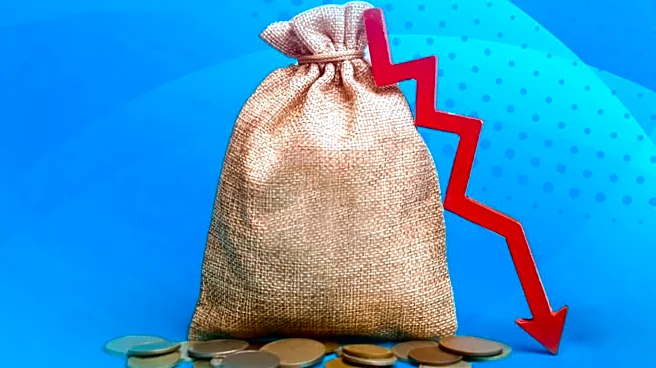
Tesla's third-quarter revenue remained largely flat compared to the previous year, reaching $28.0 billion. Despite this, the company's GAAP operating margin saw a significant drop to 2.6% from 5.8%. This decline occurred even with the benefit of $786
million in tariff refunds, which helped lower costs. Operating expenses for the quarter surged by 39% to $4.8 billion. According to CFO Vaibhav Taneja, this increase in operating expenses is expected to continue as Tesla focuses on commercializing its new products. The company also reported $1.5 billion in free cash flow, which was heavily reliant on $2.6 billion from working capital, primarily from unpaid bills. Without this working capital contribution, free cash flow would have been negative $1.1 billion.
Why It's Important?
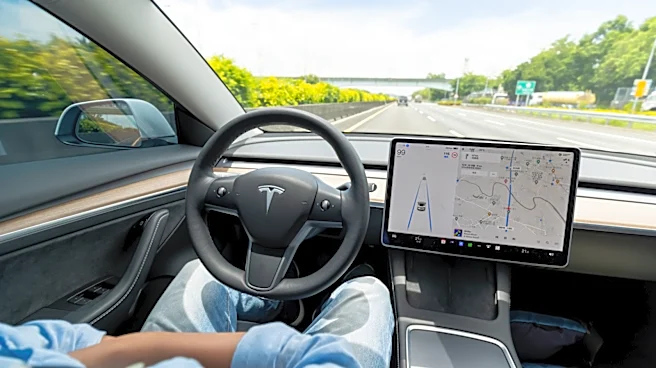
The flat revenue and declining operating margin at Tesla, coupled with rising operating expenses, signal potential challenges for the company's profitability in the near term. The reliance on working capital to maintain positive free cash flow suggests underlying financial pressures. This situation is particularly significant for investors who are currently valuing Tesla at a high multiple, anticipating future profits from ventures like Robotaxi, Full Self-Driving (FSD), and Optimus. The current financial performance indicates that these anticipated profits are not yet materializing in the company's core operations. The substantial capital spending planned for 2026, projected to be over double that of 2025, further emphasizes the company's investment phase, which will continue to impact short-term profitability. This financial trajectory could influence investor sentiment and potentially lead to a re-evaluation of Tesla's stock valuation if future product commercialization does not rapidly translate into improved financial metrics.
What's Next?
Tesla is expected to report its fourth-quarter results in late January, which will include its spending plan for 2027. Investors will be closely watching for a capital expenditure guide that aligns with the $23.8 billion analysts anticipate. A key indicator of a strengthening bull case for Tesla would be a GAAP operating margin that recovers above the 2.6% reported in the third quarter. The company's ability to commercialize its new products, such as Robotaxi and FSD, and translate these into tangible profits will be critical. Continued high operating expenses without a corresponding increase in revenue and margin could put further pressure on the stock. The market will be looking for clear signs that Tesla's significant investments are beginning to yield positive financial returns.
Beyond the Headlines
The financial dynamics at play within Tesla highlight a broader trend in the technology and automotive sectors: the significant investment required for innovation and future growth. While Tesla's stock valuation often reflects future potential rather than current earnings, the sustained period of flat revenue and declining margins could test investor patience. The company's strategy of heavy investment in new products like FSD and Optimus, while promising long-term gains, creates short-term financial vulnerabilities. This situation raises questions about the sustainability of high market valuations based primarily on future speculative ventures, especially when current operational profitability is under pressure. It also underscores the challenge for companies to balance aggressive innovation with sound financial management and consistent profitability.