






What's Happening?
Rice University has officially renamed its historic Rice Stadium to First Community Stadium, following a 20-year naming rights agreement with Houston-based First Community Credit Union. This deal, which also designates First Community as the official financial
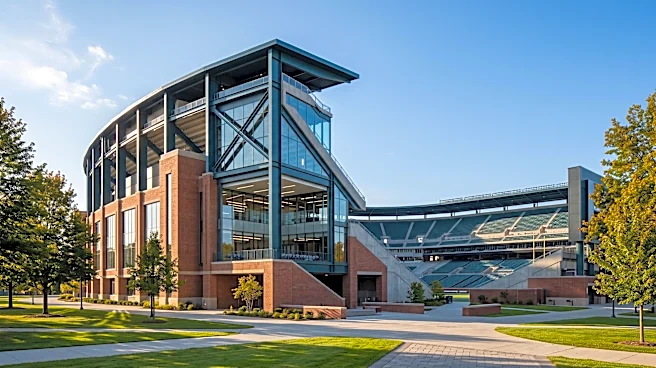
institution for Rice Football, Rice Athletics, and the Association of Rice Alumni, includes provisions for alumni banking services, internships for Rice students, and branded credit cards. The announcement comes as the university prepares for a significant $120 million renovation project, known as the Gateway Project, which is expected to commence at the end of the current football season and continue through 2027. This renovation will reduce the stadium's seating capacity from 47,000 to 30,000. The agreement is described as a 'naming rights and campus collaboration agreement,' extending beyond mere stadium branding to include financial literacy education across campus and career development opportunities for students.
Why It's Important?
This naming rights deal is crucial for Rice University's athletic department, providing a significant financial injection to enhance its competitiveness and support student-athlete development. The interim athletic director, Eric George, emphasized that the agreement is 'critical' for funding on-field performance and long-term career development for student-athletes. For First Community Credit Union, the partnership offers extensive brand exposure through broadcast airtime and direct engagement with a desirable demographic—students, alumni, faculty, and staff—facilitating member acquisition. The timing of the 20-year deal, preceding a major stadium renovation, suggests a strategic long-term investment, allowing the credit union's name to be prominently associated with the modernized venue from its reopening. This model could serve as a blueprint for other athletic departments outside of major conferences and regional financial institutions considering similar partnerships, demonstrating how comprehensive campus collaborations can maximize value beyond simple branding.
What's Next?
The $120 million Gateway Project renovation of First Community Stadium is slated to begin at the conclusion of the current football season and is projected to be completed by 2027. During this period, the stadium's capacity will be reduced from 47,000 to 30,000 seats, with a focus on adding private suites and premium seating while preserving elements of the original 1950 design. Rice University is also actively seeking additional sponsorship opportunities, including a jersey patch sponsor and naming rights for other athletic venues, as part of its broader strategy to generate revenue. The university aims to secure deals that align with its overall institutional values and objectives. The success of this comprehensive collaboration will be closely watched, particularly how the renovated stadium and expanded partnership initiatives impact fan engagement, student opportunities, and the financial health of Rice Athletics.
Beyond the Headlines
The partnership between Rice University and First Community Credit Union represents a growing trend in collegiate athletics where naming rights deals evolve into deeper institutional collaborations. Beyond the financial benefits, the agreement's emphasis on financial literacy education, internships, and career services highlights a shift towards integrated sponsorships that offer tangible benefits to the broader university community. This approach transforms a traditional branding exercise into a strategic alliance that supports academic and professional development for students, aligning with the educational mission of the university. The deal also underscores the increasing financial pressures on collegiate athletic programs, particularly those outside the Power conferences, to secure innovative funding sources. The decision to reduce stadium capacity while enhancing premium seating reflects a broader industry trend towards optimizing the fan experience for a more targeted demographic, potentially influencing future stadium development projects across the country.