





What's Happening?
Seventeen scenic road trips across the United States have been identified as top bucket list destinations, offering diverse experiences from alpine adventures to coastal drives. These routes include the Going-to-the-Sun Road in Montana's Glacier National
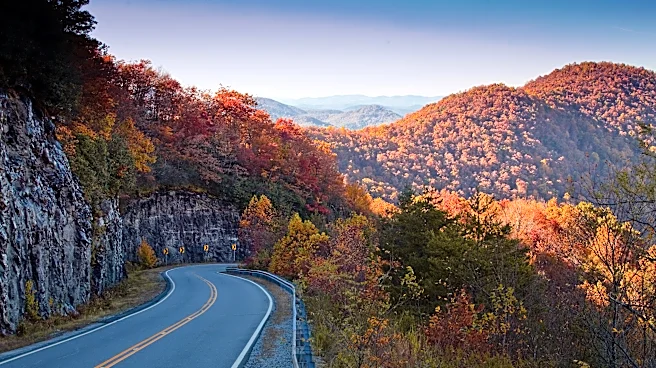
Park, known for its glacier-carved mountains and wildlife viewing opportunities. The Monument Valley Scenic Drive in the American Southwest showcases iconic sandstone buttes, while South Dakota's Black Hills Loop combines landmarks like Mount Rushmore with scenic drives and roadside attractions. California's Highway 1 offers dramatic coastal views and wildlife, including elephant seals. New Hampshire's Kancamagus Highway is celebrated for its fall foliage, and Hawaii's Road to Hana on Maui provides a challenging drive with numerous natural stops. Other notable routes include the Historic Hot Springs Loop in Colorado, the Great River Road tracing the Mississippi River, Utah's State Route 12 connecting national parks, the Oregon Coast for whale watching, the Blue Ridge Parkway for fall colors, the Peak to Peak Scenic and Historic Byway in Colorado for wildlife, the historic Route 66, the Natchez Trace Parkway for music lovers, Florida's Overseas Highway for ocean views, and the Texas Hill Country for wildflowers. The drive from Anchorage to Seward in Alaska is also highlighted for its stunning scenery and potential for beluga whale sightings.
Why It's Important?
The emphasis on U.S. road trips as bucket list experiences signifies a significant trend in domestic tourism, impacting various sectors of the American economy. The popularity of these routes drives demand for gasoline, vehicle maintenance, and rental cars, benefiting the automotive and transportation industries. Local economies along these routes, including small towns and national parks, experience increased revenue from lodging, dining, retail, and recreational activities. The promotion of specific scenic byways and national parks can lead to job creation in tourism-related services and infrastructure development. Furthermore, the focus on natural beauty and outdoor activities aligns with growing consumer preferences for experiential travel and eco-tourism, potentially encouraging sustainable practices within the travel industry. This trend also supports the preservation and maintenance of national parks and historic sites, as increased visitation often translates to greater funding and public awareness for these protected areas.
What's Next?
With the 100th anniversary of Route 66 approaching, there is an anticipated resurgence in interest for classic American road trips. This could lead to increased marketing efforts by state tourism boards and travel organizations to promote these iconic routes. Infrastructure improvements, such as enhanced rest stops, charging stations for electric vehicles, and updated signage, may be implemented to accommodate the growing number of road trippers. Businesses along these routes are likely to expand their offerings, including unique lodging options, local culinary experiences, and guided tours. The integration of technology, such as mobile apps for navigation and points of interest, will also become more prevalent. Additionally, there may be a continued focus on sustainable tourism practices to manage the environmental impact of increased visitation to natural and historical sites, ensuring these bucket list destinations remain preserved for future generations.
Beyond the Headlines
The enduring appeal of the American road trip reflects a deeper cultural narrative of freedom, exploration, and self-discovery. These journeys are not just about reaching a destination but about the experience of the open road, the diverse landscapes, and the unexpected encounters along the way. This cultural phenomenon fosters a sense of national identity and appreciation for the country's vast and varied geography. Environmentally, the increased popularity of road trips, particularly to natural areas, highlights the delicate balance between tourism and conservation. It underscores the need for responsible travel and sustainable management practices to protect these pristine environments from overuse and degradation. Socially, road trips can strengthen family bonds and create lasting memories, offering a unique form of shared experience in an increasingly digital world. The emphasis on local attractions and small-town charm also helps to preserve regional cultures and economies, counteracting the homogenization often associated with mass tourism.